
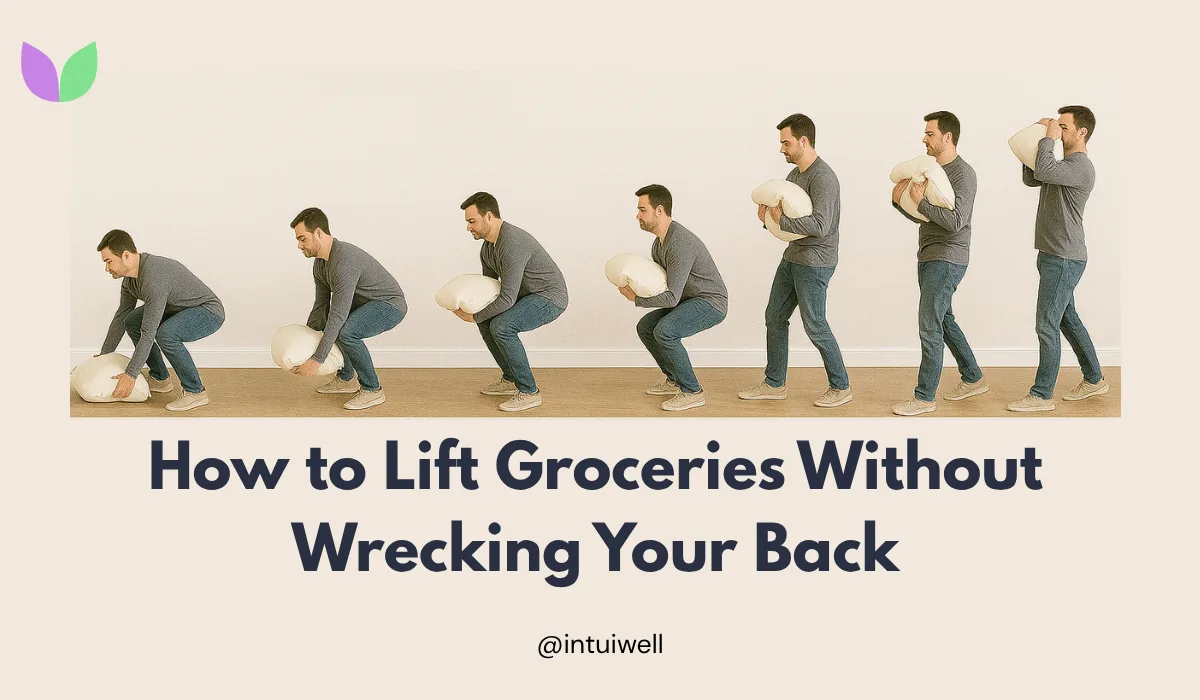
You walk in with bags full of groceries: heavy rice sacks, frozen chicken breast, multiple bags of produce. It’s all part of ordinary life.
But how often do you stop to think: Is this causing my back to pay the price?
Improper lifting is one of the most common ways ordinary tasks turn into injuries. But it doesn’t have to be that way. With a few smart tweaks, you can lift groceries safely, maintain spine health, and keep your body moving freely.
Why Your Back Complaints
When you bend from the waist, hold bags away, twist while walking or carry loads that your legs and core aren’t ready for, your spine, discs, muscles, and ligaments all feel it.
- According to ergonomics guidelines, bending at the waist rather than using leg power greatly increases stress on the lumbar spine.
- Holding loads far from your body or twisting while lifting are big risk factors for back strain or worse.
- Every day lifting isn’t gym-lifting, but the mechanics matter just the same. Proper technique keeps you safe.
So yes groceries might seem benign, but over time, bad habits add up.
The 5-Step Grocery Lift Routine
Use this each time you bring bags in. It takes less than a minute and primes your body for safer movement.
| Step | What to Do | Why It Helps |
| 1. Plan the lift | Pause. Check how heavy the bags are, clear the path, make sure there’s no twisting needed. | Planning reduces surprises and prevents awkward lifting. |
| 2. Feet wide + load close | Stand with feet shoulder-width, one foot slightly forward. Hold bags close to your body (at your mid-thigh to mid-chest zone). | Keeps your center of gravity stable and reduces lever-arm stress on the spine. |
| 3. Bend knees, hips, keep back straight | Squat to pick up bags rather than bending at the waist; chest up, core engaged. | Let your legs (stronger) do the work instead of overloading the back. |
| 4. Lift smoothly, no twist | Drive through your heels, extend your legs, keep the load close. If you need to turn, pivot with your feet not your spine. | Twisting + load = risk of disc injury or muscle pull. |
| 5. Lower with control | When placing bags down, reverse the lift: hinge at hips/knees, keep back straight, set gently. | Many injuries happen during the lowering phase when fatigue or haste kicks in. |
Bonus Tips for Everyday Life
- Distribute weight: If you have multiple bags, carry one in each hand so you stay balanced.
- Use handles: Grab bags by handles or use reusable totes with good grips and awkward handholds increase risk.
- Avoid overloading: Two lighter trips beat one overloaded haul. The “feel it’s fine” load might still be too much.
- Strength and mobility support: A simple weekly gluteal-leg/core routine will help your body cope with lifting better if your legs and core are strong, and your back isn’t doing all the work.
- Ergonomic environment: Store frequently used items at waist-to-shoulder height to avoid heavy lifts from the floor or overhead.
Final Thoughts
Groceries don’t need to be a beast for your back. With a little awareness and proper technique, you make everyday loading into safe movement rather than risk.
The lift itself might take 10 seconds, but the benefit lasts all week (and beyond). Next time you step through the door with bags in hand, remember: your posture, your mechanics, and your spine matter. Treat the load like a mini-workout: smart, controlled, balanced. Your back will thank you.
Summary:
Most back pain from groceries comes from bending at the waist, lifting bags away from the body, or twisting under load. The blog explains how to use proper body mechanics: plan the lift, keep the load close, bend your knees and hips instead of your lower back, avoid twisting, and control the lowering phase. Distributing weight evenly, using quality bag handles, and strengthening the legs and core all reduce stress on the spine. The takeaway: everyday lifting matters as much as gym form, and protecting your back starts with small, consistent habits.
FAQs
- Why does my back hurt after carrying groceries?
Because you’re likely bending from the waist, letting the bags pull forward, or twisting while carrying. That puts excessive strain on the lumbar spine. - Should I make multiple trips instead of carrying everything at once?
Yes. One overloaded trip increases injury risk. Two lighter trips reduce stress on your back and grip. - Does posture really matter for lifting bags?
Yes. Keeping the load close and using your legs reduces spinal load significantly. Posture is not aesthetic; it’s mechanical leverage. - Can strengthening my core help?
Yes. Strong glutes, core, and legs reduce how much your lower back has to compensate during daily lifting. - What’s the safest way to turn while carrying groceries?
Don’t twist your spine. Pivot your feet and move your whole body together.
If you’re dealing with back strain already, don’t wait for it to “get better on its own.”
Book a consultation with Intuiwell and get a personalized movement and recovery plan.
→ Click to request a callback or schedule your session now.


