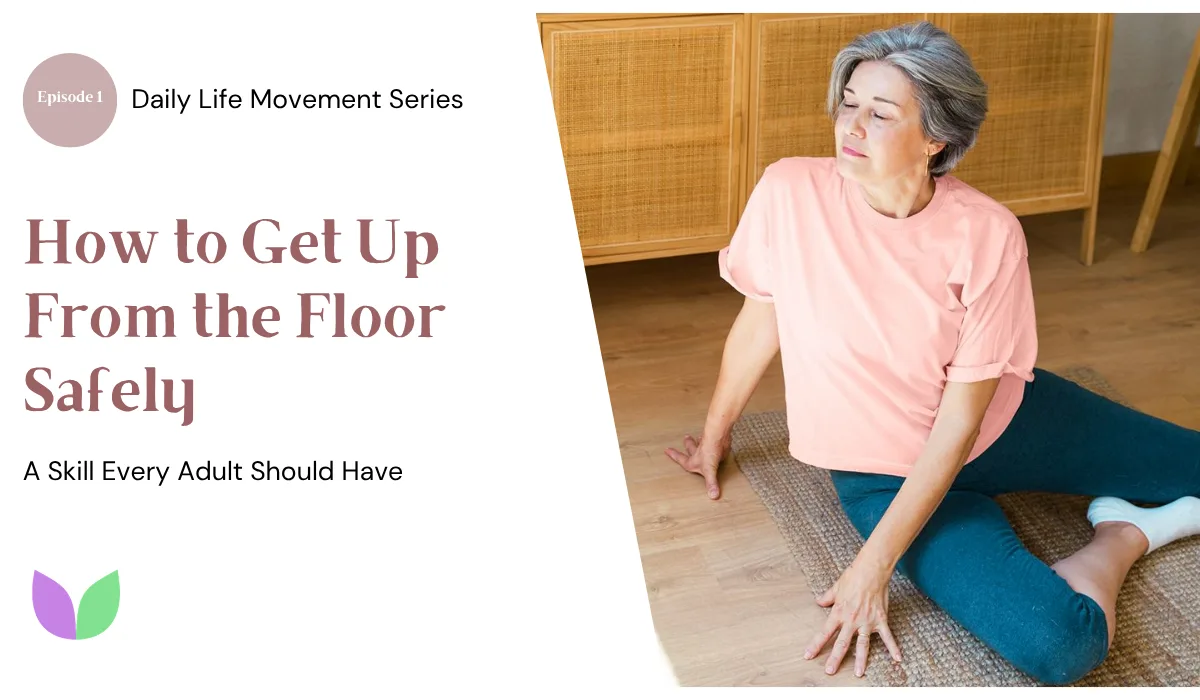
Daily Life Movement Series Episode 1: Getting Up from the Floor Safely
Most people don’t think about getting up from the floor until they struggle with it.
Whether it’s playing with a child, doing housework, stretching, or simply sitting down, the ability to get up from the floor safely and independently is one of the most important real-life fitness skills.
Yet, it’s rarely trained.
This article teaches you:
Why this skill matters
What it says about your body
And how to improve it safely
Why Getting Up From the Floor Matters More Than You Think
Being able to rise from the floor requires:
- Hip mobility
- Leg strength
- Core stability
- Balance
- Coordination
In fact, research shows that the ability to get up from the floor is strongly associated with longevity and functional independence.
It’s not about looking fit. It’s about staying capable.
A Simple Self-Test (No Equipment)
Try this right now:
- Sit on the floor.
- Now stand up.
- No hands if possible.
Then try with your hands.
Notice:
- Did you feel unstable?
- Did your knees complain?
- Did you need support?
This isn’t to judge, it’s to observe your movement capacity.
The Safest Way to Get Up From the Floor (Step-by-Step)
This method is widely used in rehabilitation and fall recovery.
Step 1: Roll to Your Side
Avoid trying to sit straight up. Roll onto one side.
Step 2: Push to Sitting
Use your arms to push your upper body upright.
Step 3: Bring One Knee Forward
Move into a half-kneeling position.
Step 4: Use Your Legs to Stand
Push through your front foot and stand up.
This sequence:
- Reduces strain on the back
- Protects the knees
- Works even when you’re tired
Common Mistakes
Don’t try to sit straight up like a sit-up → Places excessive load on the spine
Don’t twist while pushing → Increases injury risk
Don’t hold your breath → Reduces stability
How to Improve This Skill (3 Simple Exercises)
You don’t need a gym.
- Sit-to-Stand from a Chair
Builds leg and hip strength.
- Half-Kneeling Holds
Improves balance and core control.
- Wall Balance Drills
Enhances stability and confidence.
Do these 3–4 times per week.
Who Should Pay Extra Attention?
This skill is especially important for:
- Adults over 30
- People with knee or back pain
- Anyone who sits most of the day
- Those recovering from illness or injury
The Bigger Picture
Most people train:
Abs, Arms, Steps
But forget to train: The ability to move through space independently.
That’s what real fitness looks like.
Key Takeaway
If you can get down to the floor and get back up confidently, your body is:
- Strong
- Mobile
- Balanced
- Resilient
That’s functional fitness in its truest form.
This is Episode 1 of the Daily Life Movement Series. If this resonated, the next one builds directly on it.
Episode 2: How to Get In and Out of a Car Without Back or Knee Pain Another movement you do every single day — and probably haven’t thought twice about. Same principle: small technique changes, significant long-term difference.
Blog Summary
Most people ignore the ability to get up from the floor until it becomes difficult. But this basic movement is a powerful indicator of real-world fitness, combining strength, mobility, balance, and coordination.
The blog explains why this skill matters, highlighting its link to independence and even longevity. It introduces a simple self-test to assess your current ability and provides a safe, step-by-step method to get up from the floor without straining your body.
It also calls out common mistakes that increase injury risk and offers three practical exercises, sit-to-stand, half-kneeling holds, and wall balance drills, to improve this ability without needing a gym.
The core message is straightforward: true fitness isn’t about appearance or isolated workouts, it’s about being able to move confidently and independently in everyday life.
FAQs
- Why is getting up from the floor important?
Because it reflects overall functional fitness, strength, balance, mobility, and coordination, all in one movement.
- What does difficulty in getting up indicate?
It usually indicates weak leg strength, poor balance, limited mobility, or a lack of coordination.
- Is it safe to practice this skill daily?
Yes, if done correctly and progressively. Start slow and use support if needed.
- Can this help prevent injuries?
Yes. Learning proper movement patterns reduces strain on joints and lowers fall risk.
- What is the safest way to get up from the floor?
Roll to your side → push to sitting → move into half-kneeling → stand using your legs.
- Who should focus more on this skill?
Adults over 30, sedentary individuals, and anyone with knee or back discomfort.
If getting up from the floor feels difficult, unstable, or painful—it’s not something to ignore.
Book a consultation call with IntuiWell to assess your movement patterns and get a personalized plan that builds real, functional strength.
Or request a call back, and we’ll help you take the first step toward moving better in daily life.
References
- European Journal of Preventive Cardiology – Sitting-Rising Test
https://academic.oup.com/eurjpc/article/21/7/892/5927973 - CDC – Falls and Older Adults
https://www.cdc.gov/falls/index.html - National Institute on Aging – Getting Up After a Fall
https://www.nia.nih.gov/health/prevent-falls-and-fractures