Zinc: The Mineral That Supports Immunity, Growth, and Cellular Repair
Deep Dive Into m2: Zinc (Zn) From The IntuiWell Nutrient Periodic Table™
“Zinc does more than support immunity. It helps your body build proteins, repair tissues, maintain healthy skin, and support normal growth and development.”
Quick Takeaways
- Zinc is an essential trace mineral involved in hundreds of enzymes and numerous processes, including DNA synthesis, protein production, immune function, wound healing, cell division, and growth.
- Zinc is required for normal taste and smell, reproductive function, and healthy skin. However, taking extra zinc does not necessarily improve these functions when zinc status is already adequate.
- In Indian diets, useful zinc sources include dals, chickpeas, rajma, soybeans, whole grains, nuts, seeds, dairy products, eggs, meat, and seafood.
- The amount of zinc in a food is not the same as the amount your body absorbs. Phytates in cereals, pulses, nuts, and seeds can reduce zinc absorption.
- Soaking, sprouting, fermentation, and appropriate food preparation can reduce phytate content and may improve zinc bioavailability. These methods do not eliminate all phytates or guarantee adequate zinc status.
- A predominantly vegetarian diet can provide zinc, but dietary variety, food preparation, and the overall amount of zinc consumed matter.
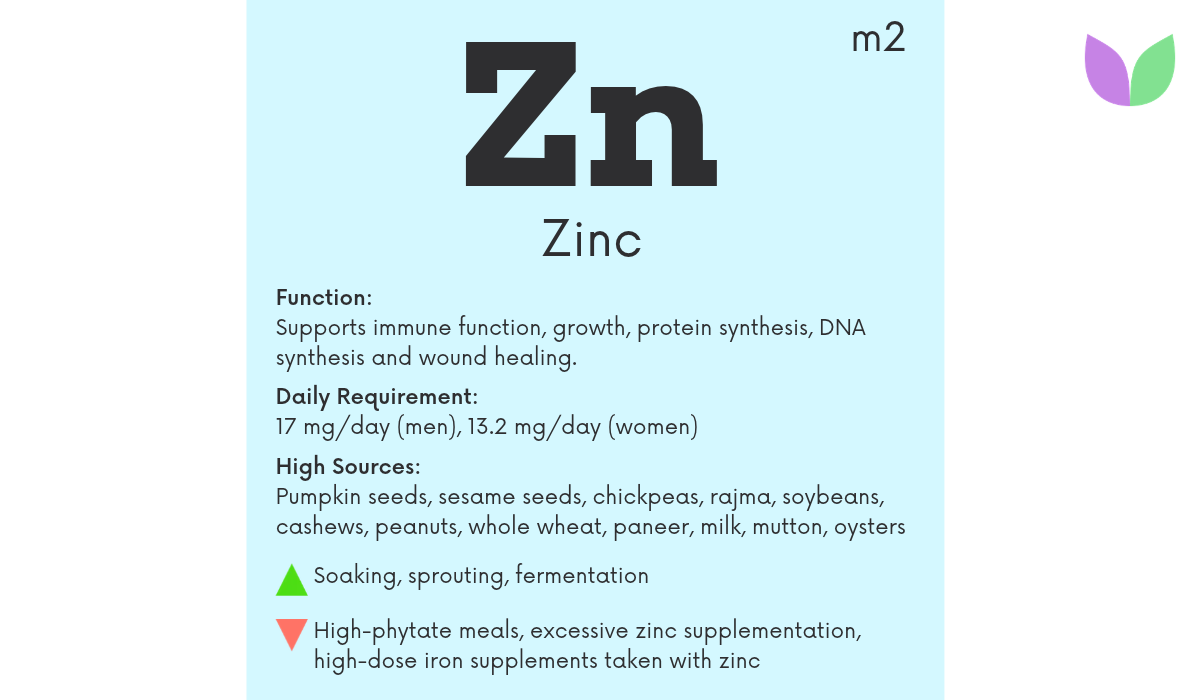
- According to the ICMR-NIN Recommended Dietary Allowances framework, the zinc RDA for Indian adults is approximately 17 mg/day for men and 13.2 mg/day for women. Recommended amounts differ during pregnancy and lactation and across other life stages.
- Zinc deficiency can affect growth, wound healing, taste, skin health, and immune function. However, hair fall, acne, fatigue, and frequent infections are not specific enough to diagnose zinc deficiency.
- Serum or plasma zinc can help assess zinc status in appropriate clinical settings, but results are influenced by factors such as recent meals, time of day, inflammation, and albumin levels. No single test reliably identifies every case of marginal zinc inadequacy.
- Excessive zinc supplementation can cause gastrointestinal symptoms and interfere with copper absorption. Long-term high-dose supplementation should not be used routinely for immunity or hair growth without an appropriate indication.
1. What Zinc Is and How Your Body Uses It
Zinc is an essential trace mineral. Your body requires it in relatively small quantities, but it is involved in a wide range of physiological processes.
Unlike some nutrients, zinc does not have a large, specialised storage reserve that can be readily mobilised to meet prolonged periods of inadequate intake. Most body zinc is present in skeletal muscle and bone, where it participates in normal cellular functions.
Zinc is required for the activity of hundreds of enzymes. It also contributes to the structure and function of numerous proteins involved in DNA synthesis, protein production, cell division, and tissue maintenance.
This makes zinc particularly important during periods when the body is growing, developing, or repairing tissue.
Zinc is obtained through food. Once absorbed in the intestine, it is transported through the circulation and taken up by different tissues. The body regulates zinc absorption and excretion in response to dietary intake and physiological needs.
However, zinc balance is not determined by food intake alone.
The amount consumed, the composition of the meal, intestinal absorption, and losses from the body all influence zinc availability.
Zinc is therefore not simply an “immunity mineral.” Its functions extend into growth, metabolism, reproduction, skin health, and cellular maintenance.
2. Primary Functions of Zinc
Immune Function
Zinc supports the normal development and function of both innate and adaptive immune responses.
It is involved in immune-cell development, cell signalling, and the regulation of inflammatory responses.
When zinc deficiency is present, immune function can become impaired. However, taking additional zinc does not automatically strengthen immunity in someone who already has adequate zinc status.
The objective is to maintain adequate zinc availability rather than maximise zinc intake.
Protein Synthesis and DNA Synthesis
Zinc is required for the activity and structural stability of many proteins involved in gene expression, DNA synthesis, and protein production.
These processes allow cells to grow, divide, and maintain normal function.
This is one reason zinc is important during childhood, adolescence, pregnancy, and periods of tissue repair.
Growth and Development
Adequate zinc is necessary for normal growth and development.
Children and adolescents require zinc to support tissue growth, cellular division, and normal physiological development.
Inadequate zinc intake can contribute to impaired growth, particularly when deficiency is sustained.
However, growth is influenced by multiple factors, including energy and protein intake, overall dietary adequacy, hormonal health, chronic disease, and genetics. Short stature alone does not establish zinc deficiency.
Wound Healing and Tissue Repair
Zinc participates in processes involved in wound healing, including cell proliferation, protein synthesis, and tissue repair.
Severe deficiency can impair wound healing.
This does not mean that zinc supplements will accelerate healing in every person with a wound. The benefit depends partly on whether zinc inadequacy is contributing to the problem.
Skin and Cellular Integrity
Zinc supports normal skin function and the maintenance of epithelial tissues.
Deficiency can cause characteristic skin changes, sometimes accompanied by hair loss and impaired wound healing.
However, acne, dry skin, and hair fall have numerous possible causes. These symptoms should not automatically be attributed to zinc deficiency or treated with high-dose supplements.
Taste and Smell
Zinc is involved in normal taste perception and may also influence smell.
Reduced taste sensation can occur in zinc deficiency, but it can also result from infections, medications, oral conditions, neurological disorders, and other nutritional problems.
Persistent changes in taste or smell warrant assessment rather than an assumption that zinc is low.
Reproductive Function
Zinc contributes to normal reproductive development and function in both males and females.
In males, zinc is involved in normal reproductive physiology, including processes related to sperm production.
However, reproductive health is multifactorial. Taking zinc supplements beyond physiological requirements has not been established as a universal treatment for infertility or low testosterone.
3. Zinc Regulation: How the Body Maintains Balance
The body regulates zinc absorption, transport, and excretion to maintain an adequate supply for cellular functions.
When dietary zinc intake is low, the intestine can increase the proportion of zinc absorbed, and the body can reduce some zinc losses.
When intake increases, absorption and excretion adjust to help maintain balance.
However, these regulatory mechanisms cannot compensate indefinitely for an inadequate diet or impaired absorption.
Unlike iron, zinc is not managed primarily through a dedicated hormone that controls intestinal absorption and release from large storage reserves. Instead, zinc balance involves intestinal transport proteins, cellular regulation, and excretion through the gastrointestinal tract and other routes.
Several factors influence zinc availability:
- The total amount of zinc consumed.
- The proportion of zinc absorbed from the diet.
- Phytate content in cereals, pulses, nuts, and seeds.
- Gastrointestinal health and intestinal absorption.
- Physiological requirements during growth, pregnancy, and lactation.
- Losses associated with certain gastrointestinal conditions.
- Interactions with some medications and supplements.
A person may regularly consume foods containing zinc yet absorb less than expected if the overall diet is rich in phytates and relatively low in bioavailable zinc.
This is particularly relevant when evaluating predominantly cereal- and pulse-based diets.
The solution is not to eliminate cereals, pulses, or millets. These foods provide valuable protein, fibre, and other nutrients. The more appropriate approach is to consider the overall dietary pattern, preparation methods, and adequacy of zinc intake.
4. Zinc and Cellular Repair: Why Adequacy Matters
Zinc participates in many of the processes that allow the body to maintain and repair itself.
Cells continuously produce proteins, replace damaged components, and respond to physiological demands. Zinc-dependent enzymes and proteins contribute to these processes.
During wound healing, for example, the body must coordinate inflammation, cell migration, tissue formation, and remodelling. Zinc is involved in several of these processes.
Similarly, during childhood and adolescence, cells must divide and tissues must grow. Zinc is one of the nutrients required to support this activity.
However, the relationship between zinc intake and physiological function is not simply linear.
If zinc intake is inadequate, correcting the deficiency can improve zinc-dependent processes. If intake is already sufficient, additional zinc does not necessarily produce further improvements.
This distinction matters when evaluating supplements marketed for skin health, hair growth, immunity, and recovery.
Adequacy supports normal function. Excess is not a shortcut to better function.
5. Zinc Absorption: Why Your Meal Matters
Zinc absorption depends on both the quantity of zinc in a meal and the substances consumed alongside it.
The principal factors include:
- Total dietary zinc intake.
- Phytate content of the meal.
- The composition of the overall diet.
- Gastrointestinal health.
- Physiological requirements.
- Certain medications and supplements.
Phytates in Indian Diets
Phytate is a naturally occurring compound found in many plant foods, particularly cereals, pulses, nuts, and seeds.
It can bind zinc in the digestive tract, forming complexes that reduce the amount available for absorption.
This is particularly relevant to diets that rely heavily on cereal-based staples and pulses.
For example, whole wheat, bajra, jowar, chickpeas, rajma, and other legumes can contribute zinc, but they also contain phytates in varying amounts.
This does not make these foods unhealthy or unsuitable.
The important distinction is between zinc content and zinc bioavailability.
A food can contain zinc without all of that zinc being absorbed.
Soaking, Sprouting, and Fermentation
Traditional Indian food preparation methods can help reduce phytate content.
Examples include:
- Soaking rajma, chickpeas, and other pulses before cooking.
- Sprouting suitable legumes.
- Fermenting batters used for idli and dosa.
- Using fermented preparations such as some traditional grain and pulse foods.
The extent of phytate reduction varies according to the food, duration, temperature, and preparation method.
These techniques may improve mineral bioavailability, but they should not be presented as guaranteeing adequate zinc absorption.
Whole Grains and Millets
Whole grains and millets can contribute zinc alongside fibre and other nutrients.
However, replacing refined grains with whole grains does not automatically guarantee higher zinc absorption, because whole grains may also contain more phytate.
This is not a reason to avoid whole grains or millets.
Instead, include a variety of foods, prepare pulses appropriately, and avoid relying on a single grain or seed as the primary solution to zinc inadequacy.
Animal Foods and Zinc
Meat, seafood, eggs, and dairy products can contribute zinc.
Meat and seafood generally provide zinc with higher bioavailability than many high-phytate plant foods.
Dairy products can also be useful sources in vegetarian diets.
For people who do not eat animal foods, a varied diet containing legumes, soy foods, whole grains, nuts, seeds, and other zinc-containing foods can still provide meaningful amounts of zinc.
Zinc Supplements and Medications
Zinc supplements can interact with certain medications.
For example, zinc can reduce the absorption of some quinolone and tetracycline antibiotics. Penicillamine can also interact with zinc supplements.
The required separation depends on the medicine, so the timing should follow the prescribing clinician’s or pharmacist’s advice.
The key principle is not to add multiple supplements or complicated timing rules without a clear reason.
6. Daily Zinc Requirements
Zinc requirements vary with age, sex, and physiological stage.
According to the ICMR-NIN Recommended Dietary Allowances (RDA) framework for Indians, the recommended daily zinc intake is approximately:
- Adult men: 17 mg/day
- Adult women: 13.2 mg/day
- Pregnancy: 14.5 mg/day
- Lactation, 0–6 months: 14.1 mg/day
Requirements for children, adolescents, and other life stages differ.
These figures are based on the ICMR-NIN RDA/EAR framework published in 2020. The NIN website also lists the report in its updated publication section. The figures should not be described as newly established in 2024.
An RDA is a population-level dietary reference intended to meet the needs of nearly all healthy individuals in a specified group. It is not a therapeutic dose for correcting a diagnosed deficiency, nor is it a recommended supplement dose.
These values refer to total daily zinc intake from the diet and other sources. A supplement, when indicated, must be considered in the context of the person’s existing dietary intake, clinical situation, and other supplements.
Dietary reference values can vary between authorities because of differences in methodology, assumptions, and population considerations. Indian recommendations are the appropriate starting point when discussing dietary requirements for Indian populations.
A person with suspected zinc deficiency may require an individualised assessment based on diet, symptoms, medical history, and appropriate investigations.
7. Where Your Zinc Really Comes From
For an Indian diet, zinc sources should be selected from foods that can be included regularly in ordinary meals.
The amount of zinc supplied by a food depends on its variety, growing conditions, preparation, and serving size. Food-composition values should therefore be interpreted in the context of the actual quantity consumed.
Strong Vegetarian Options
1. Pumpkin seeds
Pumpkin seeds can contribute zinc along with protein, unsaturated fats, and other minerals.
They can be included in seed mixes, chutneys, or as an addition to meals.
Because seeds are energy-dense and are generally eaten in small quantities, they should be considered one component of the diet rather than a complete solution to zinc requirements.
2. Sesame seeds (til)
Sesame seeds contain zinc and can be used in chutneys, podi, til-based preparations, and other traditional foods.
They also contribute calcium, fat, and other nutrients.
As with other seeds, the amount consumed and the bioavailability of zinc matter.
3. Chickpeas (chana)
Chickpeas provide zinc along with protein, fibre, and other minerals.
Practical options include chana masala, boiled chickpeas, roasted chana, and chickpea-based preparations.
Soaking and thoroughly cooking dried chickpeas are useful preparation practices.
4. Rajma and other beans
Rajma and other legumes provide zinc alongside protein and fibre.
They can be included in regular meals rather than treated as occasional health foods.
Appropriate soaking and cooking are important, both for food safety and digestibility.
5. Soybeans and tofu
Soybeans contain zinc and protein. Tofu can be a practical option for people who want to increase their intake of plant protein.
Soy foods can be particularly useful in vegetarian diets because they contribute several nutrients in addition to zinc.
However, the zinc content and absorption from different soy products vary.
6. Whole grains and millets
Whole wheat, jowar, bajra, and other grains can contribute zinc.
Their overall nutritional contribution includes fibre and other nutrients, but phytate content can reduce zinc bioavailability.
There is no need to eliminate these grains. Variety and appropriate preparation are more useful than avoiding them.
7. Nuts
Cashews, peanuts, and other nuts can contribute zinc.
They are also sources of energy, unsaturated fats, and other nutrients.
Nuts are useful additions to a varied diet, but the contribution from a small handful should not be exaggerated.
8. Dairy products
Milk, curd, and cheese can contribute zinc to vegetarian diets.
They may be especially useful when meals contain relatively little zinc from other sources.
Dairy products should be included according to individual tolerance, preferences, and overall nutritional needs.
Non-Vegetarian Sources
1. Meat
Meat provides zinc with relatively good bioavailability.
2. Shellfish
Some shellfish, particularly oysters, are exceptionally rich sources of zinc. Availability and consumption patterns vary in India.
3. Fish
Fish contributes zinc in varying amounts depending on the species and serving size.
4. Eggs
Eggs provide zinc alongside protein and other nutrients. Their contribution varies according to portion size and the rest of the meal.
What About Spinach and Other Green Vegetables?
Green leafy vegetables contribute important nutrients, but they are generally not the most concentrated sources of zinc.
They should remain part of a balanced diet rather than being relied upon as the primary strategy for meeting zinc requirements.
What About Fruits?
Most fruits contain relatively little zinc.
Fruits remain valuable for their fibre, vitamins, minerals, and other beneficial components, but they should not be promoted as major zinc sources.
What About Sprouts?
Sprouted legumes can contribute zinc and protein.
Sprouting may reduce phytate content under suitable conditions, but the extent of reduction varies.
Sprouts should be prepared and handled safely, especially for pregnant people, older adults, young children, and those with weakened immune systems.
The Indian Food Composition Tables Matter
The Indian Food Composition Tables published by ICMR-NIN provide analytical data for foods consumed in India.
These are preferable to relying exclusively on generic online lists of “zinc-rich foods,” which may use different varieties, serving sizes, or food-composition databases.
The practical objective is to build a varied dietary pattern with meaningful zinc sources rather than chase a single supposedly super-rich food.
8. Timing and Practical Use
Zinc does not require a complicated timing protocol when it is obtained through a balanced diet.
The priority is to consume a variety of zinc-containing foods and consider factors that affect absorption.
A practical approach is:
Regular zinc-containing foods + dietary variety + appropriate preparation + adequate overall intake
For example:
Breakfast: Fermented idli or dosa with sambar.
Lunch: Rajma or chana with rice or roti and vegetables.
Snack: Roasted chana or a small portion of nuts and seeds.
Dinner: Tofu or another protein-rich preparation with whole grains and vegetables.
This is an illustrative pattern, not a prescribed menu. The zinc contribution will depend on the portions, ingredients, and the rest of the day’s intake.
Do You Need to Avoid Tea and Coffee?
Tea and coffee are particularly relevant to non-haem iron absorption because of their polyphenols.
Zinc absorption is more directly affected by phytate, and the evidence does not justify automatically applying every iron-timing rule to zinc.
There is no general requirement to eliminate tea or coffee solely to improve zinc absorption.
Should Zinc Supplements Be Taken on an Empty Stomach?
Some zinc supplements can cause nausea or stomach discomfort, particularly when taken without food.
The appropriate timing depends on the formulation, the reason for supplementation, tolerability, and any medication interactions.
Follow the product instructions and the advice of the prescribing clinician rather than assuming that an empty stomach is always preferable.
What About Iron and Other Mineral Supplements?
High-dose mineral supplements can sometimes affect one another’s absorption.
For example, taking 25 mg or more of elemental iron at the same time as a zinc supplement can reduce zinc absorption.
This does not mean that minerals in ordinary mixed meals must be separated. The effect depends on the doses and circumstances.
If someone is taking several mineral supplements, the complete regimen should be reviewed with a clinician or pharmacist rather than adding multiple timing rules without justification.
9. Signs You May Be Low on Zinc
Zinc deficiency can develop gradually, and its symptoms are not always specific.
Possible manifestations include:
- Impaired growth in children.
- Delayed wound healing.
- Reduced taste sensation.
- Skin changes, including characteristic dermatitis.
- Hair loss in some cases.
- Reduced appetite.
- Impaired immune function.
- Diarrhoea in some cases of significant deficiency.
- Reproductive problems in severe or prolonged deficiency.
However, these symptoms can have many other explanations.
For example, hair fall may be associated with iron deficiency, thyroid dysfunction, inadequate protein or energy intake, illness, stress, or other conditions.
Acne does not establish zinc deficiency. Neither does fatigue or a history of frequent colds.
The likelihood of deficiency depends on the person’s dietary pattern, medical history, absorption, losses, and clinical findings.
Symptoms can raise a question about zinc status, but they cannot establish the diagnosis on their own.
10. When Zinc Can Backfire
Zinc is essential, but excessive intake can cause harm.
Gastrointestinal Effects
High doses of supplemental zinc can cause:
- Nausea.
- Vomiting.
- Abdominal discomfort.
- Diarrhoea.
- Reduced appetite.
- Headache or dizziness in some cases.
Copper Deficiency
One of the most important risks of prolonged high-dose zinc supplementation is reduced copper absorption.
Zinc can interfere with copper metabolism, and sustained excessive intake can eventually contribute to copper deficiency.
Copper deficiency can cause anaemia, abnormalities in white blood cells, and neurological problems.
This is particularly important when people take high-dose zinc supplements for months without supervision.
Immune Function
Although zinc is required for normal immune function, excessive zinc intake can impair aspects of immune function.
More zinc is therefore not necessarily better for preventing infections.
How Much Is Too Much?
The US National Institutes of Health lists a tolerable upper intake level of 40 mg/day for adults, counting zinc from food, beverages, supplements, and medications.
This is a US reference value, not an Indian dietary target, a personalised recommendation, or a reason to self-prescribe doses approaching that amount.
The appropriate safety threshold and clinical use of supplements must be considered in context, especially when products contain several nutrients or when a clinician has prescribed zinc for a specific indication.
A medically supervised therapeutic regimen may differ from routine supplementation.
Zinc-containing cold remedies and lozenges also require attention to dose, duration, and product instructions.
The objective is not to maximise zinc intake.
The objective is to maintain adequate zinc availability without unnecessary excess.
11. Zinc and Common Health Conditions
Zinc Deficiency
Zinc deficiency can result from inadequate intake, poor absorption, increased losses, or a combination of these factors.
Dietary inadequacy is one possible contributor, particularly when the diet lacks variety or provides relatively little bioavailable zinc.
However, a diagnosis should not be based solely on hair fall, skin symptoms, or frequent infections.
Vegetarian and Vegan Diets
Plant foods can provide zinc, but phytates in cereals, pulses, nuts, and seeds can reduce absorption.
A well-planned vegetarian diet can include meaningful zinc sources through legumes, soy foods, whole grains, nuts, seeds, and dairy products where consumed.
A vegan diet excludes dairy and other animal foods, so careful dietary planning becomes especially important.
The appropriate response is not to assume every vegetarian person needs a zinc supplement. It is to evaluate the actual dietary pattern and individual risk factors.
Gastrointestinal Disorders and Malabsorption
Conditions affecting intestinal absorption can increase the risk of zinc inadequacy.
Examples include certain inflammatory bowel diseases, coeliac disease, and conditions involving significant intestinal dysfunction or surgery.
Persistent diarrhoea can also contribute to zinc losses.
When zinc inadequacy is suspected in someone with gastrointestinal symptoms, the underlying condition deserves attention rather than simply adding a supplement.
Pregnancy and Lactation
Zinc supports normal fetal growth, tissue development, and cellular function.
Requirements change during pregnancy and lactation.
However, this does not mean that every pregnant or lactating person needs an additional high-dose zinc supplement beyond an appropriate prenatal or prescribed regimen.
Supplementation should be considered in the context of the overall diet, existing supplements, clinical assessment, and local antenatal guidance.
Skin and Hair Concerns
Zinc deficiency can cause skin abnormalities and hair loss.
However, zinc supplementation is not a universal treatment for acne, hair thinning, or hair fall.
When these symptoms persist, the assessment should consider other nutritional, hormonal, dermatological, and medical causes.
Diabetes and Metabolic Health
Zinc participates in insulin synthesis, storage, and secretion, and it is involved in numerous enzymes related to metabolism.
These physiological roles are important, but they do not establish that zinc supplementation improves blood glucose control in every person with diabetes.
The evidence for supplementation depends on the population studied, baseline zinc status, dose, and outcome measured.
Zinc should not replace established diabetes management or be prescribed as a routine glucose-lowering intervention without an appropriate indication.
Recurrent Infections
Zinc deficiency can impair immune function.
Supplemental zinc has been studied in certain infections, including the common cold, but results depend on the formulation, dose, timing, and population.
Evidence from specific therapeutic uses should not be generalised into a claim that routine zinc supplementation prevents all infections.
Persistent or recurrent infections warrant appropriate medical evaluation.
12. Lab Markers Related to Zinc
Zinc status can be more difficult to assess than a simple dietary intake calculation suggests.
No single laboratory test reliably identifies every case of marginal zinc inadequacy.
Serum or Plasma Zinc
Serum or plasma zinc is commonly used when biochemical assessment is indicated.
However, concentrations can be influenced by:
- Recent food intake.
- Time of day.
- Inflammation or acute illness.
- Albumin concentrations.
- Hormonal and physiological factors.
- Sample collection and handling.
A low result can support the possibility of zinc deficiency in the appropriate clinical context, but it should not be interpreted in isolation.
A normal result also does not necessarily exclude every case of marginal inadequacy.
Dietary Assessment
A detailed dietary history can help identify risk factors.
Useful questions include:
- How frequently are pulses and legumes consumed?
- Are nuts and seeds included regularly?
- Is the diet predominantly cereal-based?
- Are soy foods, dairy products, eggs, or animal foods consumed?
- Are food preparation methods likely to reduce phytate content?
- Is the person following a highly restrictive diet?
- Are there signs of gastrointestinal disease or persistent diarrhoea?
Dietary assessment does not directly measure zinc status, but it can identify opportunities to improve intake.
Clinical Assessment
A clinician may consider skin changes, wound healing, growth patterns, gastrointestinal symptoms, dietary history, and other findings.
None of these findings is specific enough to establish zinc deficiency alone.
Other Investigations
Additional tests may be needed when symptoms suggest another condition.
For example, persistent hair loss might warrant evaluation of iron status, thyroid function, protein and energy intake, or other causes depending on the history and examination.
These investigations should be selected according to the clinical question rather than ordered as a routine zinc-deficiency panel.
A Practical Starting Point
When zinc deficiency is suspected:
Dietary assessment + clinical history + examination
can help establish whether further investigation is appropriate.
Serum or plasma zinc, interpreted in context, may provide additional information.
The key distinction is:
Dietary zinc intake estimates what you consume. A zinc laboratory result reflects a particular biological measurement. Neither should be interpreted without the broader clinical context.
13. Zinc in Different Life Stages
Infancy and Childhood
Zinc is required for normal growth, cell division, and development.
Infants and young children depend on appropriate feeding practices to meet their nutritional requirements.
During complementary feeding, suitable zinc-containing foods should be introduced according to age-appropriate feeding guidance.
Persistent poor growth should be assessed comprehensively rather than attributed to zinc deficiency alone.
Adolescence
Adolescence involves rapid growth and tissue development.
Adequate zinc intake is one component of meeting nutritional requirements during this period.
A varied diet containing pulses, soy foods, nuts, seeds, whole grains, and other suitable sources can contribute to adequacy.
Reproductive-Age Adults
Zinc supports normal cellular and reproductive function.
However, reproductive symptoms, menstrual concerns, or changes in sexual function should not automatically be attributed to zinc status.
Pregnancy
Zinc contributes to fetal growth and normal development.
Dietary requirements change during pregnancy, and supplementation decisions should follow appropriate antenatal guidance.
Lactation
Zinc is required for normal maternal physiology and is supplied through breast milk.
Requirements vary during lactation, so overall dietary adequacy remains important.
Older Adults
Dietary variety, appetite, medication use, and gastrointestinal conditions can influence nutritional adequacy in older adults.
However, age alone does not establish a need for zinc supplementation.
The person’s actual intake, clinical situation, and risk factors should guide assessment.
14. Common Zinc Myths
Myth 1: Zinc Is Only an Immunity Mineral.
Zinc supports immune function, but it is also involved in protein synthesis, DNA synthesis, growth, wound healing, taste perception, and many enzyme functions.
Myth 2: Hair Fall Means You Need Zinc.
Hair loss has many possible causes.
Zinc deficiency is one possibility, but iron deficiency, thyroid dysfunction, illness, stress, inadequate energy or protein intake, and dermatological conditions may also contribute.
Myth 3: Every Vegetarian Person Needs a Zinc Supplement.
Not necessarily.
Vegetarian diets can provide zinc. The important considerations are dietary adequacy, phytate content, food preparation, absorption, and individual risk factors.
Myth 4: Pumpkin Seeds Alone Can Meet Your Zinc Requirements.
Pumpkin seeds contribute zinc, but the amount consumed is usually much smaller than 100 g, and the absorbed amount differs from the total zinc content.
A varied dietary pattern is more reliable than depending on one food.
Myth 5: More Zinc Means Stronger Immunity.
Zinc is essential for normal immune function, but excess intake can cause adverse effects and interfere with copper absorption.
Supplementation beyond requirements is not automatically beneficial.
Myth 6: Acne Is Proof of Zinc Deficiency.
No.
Acne is influenced by several biological and environmental factors. It cannot be used as a stand-alone indicator of zinc status.
Myth 7: Sprouting Removes All Antinutrients.
Sprouting can reduce phytate under suitable conditions, but the extent varies.
It should not be assumed to remove all phytates or eliminate every factor affecting mineral absorption.
Myth 8: A Normal Zinc Blood Test Always Rules Out Inadequacy.
Serum or plasma zinc has limitations.
Results should be interpreted alongside dietary intake, symptoms, inflammation, and other relevant findings.
Myth 9: Zinc Supplements Prevent Every Common Cold.
Evidence for zinc in the common cold depends on the specific intervention and circumstances. Findings from particular treatment protocols do not establish that routine supplementation prevents all respiratory infections.
Myth 10: Zinc Supplements Are Harmless Because Zinc Is Essential.
Excessive intake can cause nausea and other gastrointestinal symptoms. Prolonged high-dose supplementation can also impair copper absorption.
Essential nutrients still have appropriate intake ranges.
15. Practical IntuiWell Zinc Framework
1. Include Meaningful Zinc Sources Regularly.
Use foods such as chickpeas, rajma, soybeans, tofu, whole grains, nuts, seeds, and dairy products where appropriate.
For non-vegetarians, meat and seafood can provide additional zinc.
2. Build Variety Into Vegetarian Meals.
Avoid relying on only one grain, one pulse, or a small daily serving of seeds to meet all mineral requirements.
Rotate different legumes, soy foods, grains, nuts, and seeds across the week.
3. Use Appropriate Food Preparation.
Soak and thoroughly cook dried legumes. Consider sprouting suitable pulses and using fermented grain-pulse preparations where practical.
These methods can improve digestibility and may improve zinc bioavailability, although the effect varies.
4. Do Not Eliminate Whole Grains or Millets Because of Phytates.
Whole grains and millets provide useful nutrients and can form part of a balanced diet.
Their phytate content is a factor to consider, not a reason to avoid them.
5. Evaluate the Entire Dietary Pattern.
Consider whether the diet supplies sufficient energy, protein, and a range of essential nutrients.
A narrow focus on zinc may miss other nutritional inadequacies that produce similar symptoms.
6. Avoid Diagnosing Deficiency From Symptoms Alone.
Hair fall, acne, fatigue, poor appetite, and frequent infections have multiple possible causes.
Use these findings to guide an appropriate assessment rather than automatically prescribing zinc.
7. Review Supplements Before Adding More.
Check the amount of elemental zinc supplied by each product, including multivitamins and combination supplements.
Avoid unintentionally accumulating high doses across several products.
8. Consider the Underlying Cause.
If zinc deficiency is suspected, assess dietary intake, gastrointestinal symptoms, malabsorption, and other relevant factors.
9. Be Careful With Long-Term High-Dose Supplementation.
Excess zinc can interfere with copper absorption.
Prolonged supplementation should have a clear indication and appropriate clinical oversight.
10. Personalise the Intervention.
The appropriate response may be to improve food variety, modify preparation methods, investigate a gastrointestinal condition, or use a prescribed supplement.
The intervention should match the identified problem rather than defaulting to supplementation.
16. Red Flags: When to Seek Professional Advice
Seek medical assessment when there is:
- Persistent poor growth or unexplained growth faltering in a child.
- Significant or persistent skin changes accompanied by other possible deficiency signs.
- Persistent hair loss requiring evaluation.
- Prolonged diarrhoea or suspected malabsorption.
- A history of gastrointestinal surgery or a condition affecting nutrient absorption.
- Persistent taste changes without an obvious explanation.
- Poor wound healing that does not improve as expected.
- Suspected zinc deficiency despite adequate dietary intake.
- No improvement despite appropriately supervised supplementation.
- Prolonged use of high-dose zinc supplements.
- Symptoms that could indicate copper deficiency during long-term zinc supplementation.
These findings do not automatically indicate zinc deficiency. They warrant assessment because the underlying cause may require specific treatment.
The goal is to establish whether zinc inadequacy is present and determine why it may have developed.
How This Fits Into the IntuiWell Nutrient Periodic Table™
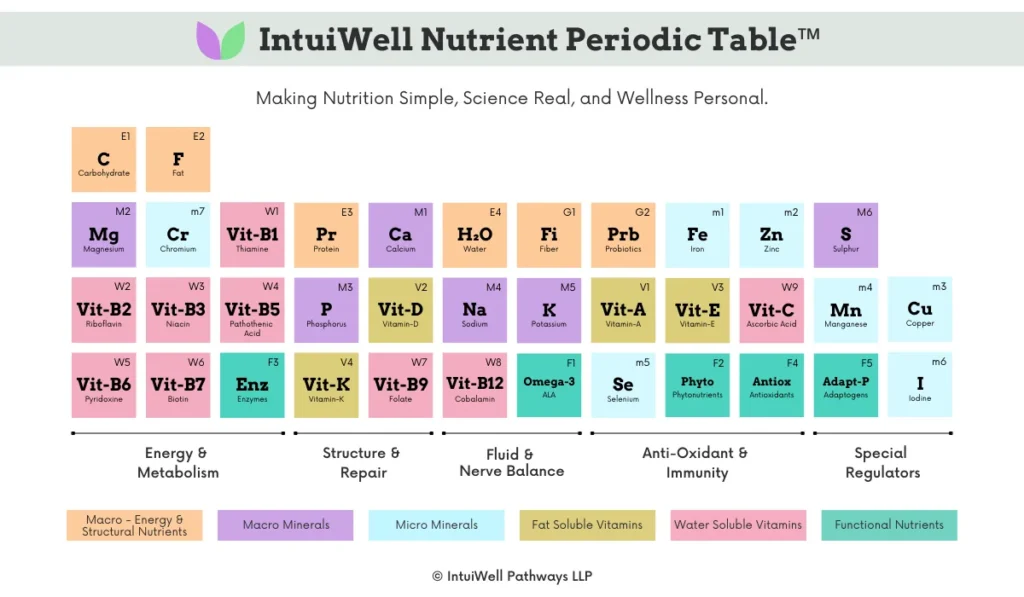
Zinc is m2 of the Micro Minerals in the IntuiWell Nutrient Periodic Table™.
It follows Iron (m1), continuing the Micro Minerals series.
Zinc is a useful example of why nutrient adequacy depends on more than the presence of a nutrient in food.
A meal may contain zinc, but the amount absorbed depends on the food matrix, phytate content, and the person’s physiological circumstances.
This is particularly relevant to Indian diets, where cereals and pulses contribute substantially to daily food intake.
An IntuiWell approach therefore looks beyond:
“Which foods contain zinc?”
and asks:
“How much zinc does the overall diet provide, how bioavailable is it, what factors may affect absorption, and is there evidence that the person needs a dietary or clinical intervention?”
Next in sequence:
m3 – Copper (Cu)
Explore how copper supports iron metabolism, connective tissue formation, nervous system function, and antioxidant enzymes.
Author
Written by: Shivani Jain
Co-founder & Clinical Lead Nutritionist, IntuiWell
Master’s in Foods & Nutrition
Helping people simplify nutrition through science, tradition, and practical kitchen wisdom.
Summary
Zinc is an essential trace mineral with functions extending far beyond immunity.
It supports enzyme activity, protein synthesis, DNA synthesis, cell division, growth, wound healing, skin integrity, taste perception, and normal reproductive function.
For Indian diets, understanding bioavailability is particularly important.
Pulses, whole grains, millets, nuts, and seeds can contribute zinc, but their phytate content may reduce absorption. Appropriate food preparation and dietary variety can help improve the overall nutritional pattern.
Dairy products, eggs, meat, and seafood can provide additional sources, depending on dietary preferences.
Most importantly, zinc deficiency should not be diagnosed from nonspecific symptoms, and supplements should not be used indiscriminately for hair growth, acne, or immunity.
Food first when appropriate. Assessment when needed. Supplementation when indicated. And always, identify the reason behind the deficiency.
FAQs
Is zinc deficiency common in vegetarians?
Vegetarian diets can provide zinc, but phytates in many plant foods reduce its bioavailability. The risk of inadequacy depends on the overall dietary pattern, preparation methods, absorption, and individual requirements. Vegetarianism alone does not establish zinc deficiency.
Which Indian foods are good sources of zinc?
Useful options include chickpeas, rajma, soybeans, tofu, whole grains, nuts, seeds, and dairy products. Meat, seafood, and eggs can provide additional zinc for those who consume them. The amount supplied depends on the food and portion size.
Does soaking dal increase zinc absorption?
Soaking can reduce some phytate under suitable conditions and may improve mineral bioavailability. The effect varies with the pulse and preparation method. It does not eliminate all phytate or guarantee adequate zinc absorption.
Does hair fall mean I have low zinc?
No. Zinc deficiency can contribute to hair loss, but hair fall also has many other causes, including iron deficiency, thyroid dysfunction, illness, stress, and inadequate energy or protein intake. Persistent hair loss warrants an appropriate assessment.
Can zinc supplements improve immunity?
Adequate zinc is necessary for normal immune function. However, supplementation is not automatically beneficial in people who already consume enough zinc. Evidence for specific uses, such as certain common-cold treatments, should not be generalised to routine prevention of all infections.
Should everyone take a zinc supplement?
No. A supplement may be appropriate when deficiency is established or there is a specific clinical indication. Dietary assessment and the person’s medical circumstances should guide the decision.
Can I take zinc with iron or calcium?
The answer depends on the doses, formulations, and reason for supplementation. Taking 25 mg or more of elemental iron at the same time as a zinc supplement can reduce zinc absorption. High supplemental doses of minerals may interact under certain circumstances. Review the complete regimen with a clinician or pharmacist rather than assuming that every mineral must be separated from every meal.
Can excess zinc be harmful?
Yes. Excessive zinc can cause nausea, vomiting, and other gastrointestinal symptoms. Prolonged high-dose supplementation can interfere with copper absorption and contribute to copper deficiency.
Is serum zinc a reliable test?
Serum or plasma zinc can be useful in appropriate clinical settings, but results are influenced by inflammation, recent food intake, time of day, and other factors. It should be interpreted alongside dietary and clinical information.
Does zinc help with acne?
Zinc has been studied in relation to acne, but acne is not proof of zinc deficiency, and supplementation is not a universal treatment. Persistent acne should be managed according to its severity and clinical circumstances.
Are millets bad for zinc absorption?
No. Millets can contribute zinc and other nutrients, but their phytate content can reduce zinc bioavailability. There is no general need to eliminate millets. Dietary variety and suitable preparation are more appropriate strategies.
Does zinc improve fertility or testosterone?
Zinc is involved in normal reproductive physiology. However, taking extra zinc has not been established as a universal way to improve fertility or raise testosterone in people with adequate zinc status. Persistent reproductive concerns require appropriate medical assessment.
Need Help Applying This to Your Diet?
If your diet includes zinc-containing foods but you are concerned about hair fall, skin health, immunity, or possible nutritional inadequacy, the answer may not simply be to add a supplement.
A more useful approach is to look at:
Dietary intake → food preparation → zinc bioavailability → clinical context → possible deficiency → appropriate intervention
That is where personalised nutrition becomes more useful than a generic list of “zinc-rich foods.”
At IntuiWell, we help you assess your dietary pattern, identify nutritional gaps, interpret relevant laboratory findings, and develop practical nutrition strategies that fit your health goals and lifestyle.
Option 1: Book a Paid Nutrition Consultation
Receive personalised nutrition guidance based on your dietary pattern, health goals, relevant laboratory reports, and overall nutritional needs.
Book a Paid Nutrition Consultation
Option 2: Ask Us on WhatsApp
Have a question before booking? Send us a message on WhatsApp, and we’ll help you understand the next best step.
No unnecessary supplements.
No nutrition myths.
Just practical, evidence-based nutrition designed for real life.
Key References
- ICMR-NIN: Recommended Dietary Allowances and Estimated Average Requirements for Indians
- ICMR-NIN: Indian Food Composition Tables
- ICMR-NIN: Dietary Guidelines for Indians, 2024
- NIH Office of Dietary Supplements: Zinc Fact Sheet for Health Professionals
- NIH Office of Dietary Supplements: Zinc Consumer Fact Sheet
- Review: Indigenous Foods of India: Nutritional Values, Antinutrient Content and Mineral Bioavailability
- Review: Zinc Status Assessment and Biomarkers