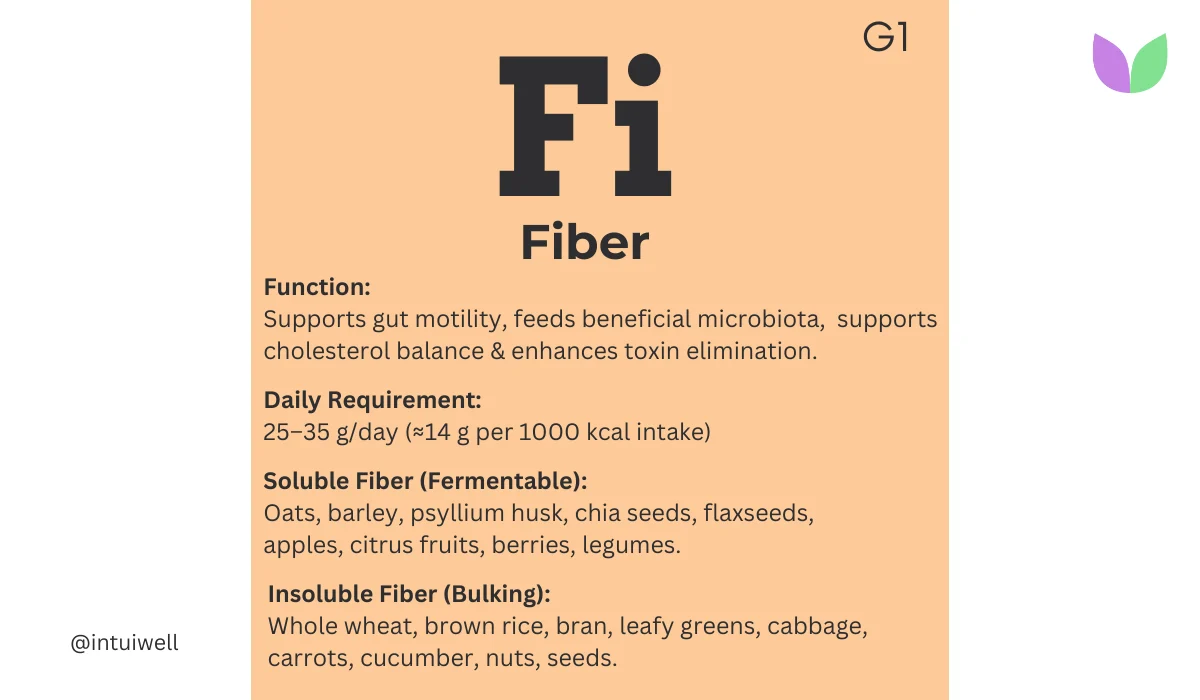
Fibre: The Silent Hero Your Gut Cannot Live Without
Deep Dive Into G1: Fibre From IntuiWell Nutrient Periodic Table™
Quick Takeaways
- Fibre is a functional carbohydrate that your body cannot digest, but your gut bacteria thrive on.
- It is one of the most powerful nutrients for blood sugar control, digestion, heart health, and weight management.
- Most adults need roughly 25–35 grams of fibre daily, yet many barely reach half of this.
- Fibre is not one single thing. It includes soluble, insoluble, resistant starch, and prebiotic fibres – each with different benefits.
- Increasing fibre too fast without enough water can cause bloating and constipation.
- A naturally fibre-rich diet lowers the risk of diabetes, heart disease, constipation, hemorrhoids, and even some cancers.
- Real foods beat supplements. Whole grains, dals, vegetables, fruits, seeds, and nuts are the best sources.
1. What Fibre Is and How Your Body Uses It
Fibre is a type of carbohydrate that your digestive enzymes cannot break down.
Unlike protein, fat, or regular carbohydrates, fibre passes through your system mostly intact.
But “not digestible” does not mean “not useful.”
In fact, fibre is one of the most active and important nutrients for long-term health.
Your body uses fibre to:
- Regulate bowel movements
- Feed healthy gut bacteria
- Slow sugar absorption
- Lower cholesterol
- Create fullness after meals
- Keep the gut lining strong
Fibre works less like fuel and more like a regulator and protector of multiple body systems.
2. Primary Functions of Fibre
Fibre supports almost every major system in your body:
Digestive Health
- Adds bulk to stool
- Prevents constipation
- Supports regular bowel movements
- Reduces the risk of piles and fissures
Blood Sugar Balance
- Slows down glucose absorption
- Reduces blood sugar spikes
- Improves insulin sensitivity
Heart Health
- Helps lower LDL (“bad”) cholesterol
- Supports healthy blood pressure
- Reduces cardiovascular risk
Weight Management
- Increases satiety
- Reduces overeating
- Supports healthy metabolism
Gut Microbiome
- Acts as food for beneficial bacteria
- Helps produce short-chain fatty acids
- Strengthens gut lining and immunity
Fibre is not just a digestive nutrient.
It is a metabolic and immune-supporting nutrient.
3. Types of Fibre – Not All Fibre Is the Same
Fibre has several categories, each with unique roles.
Soluble Fibre
- Dissolves in water and forms a gel
- Slows digestion and sugar absorption
- Lowers cholesterol
Sources: oats, beans, apples, citrus fruits, psyllium, chia seeds
Insoluble Fibre
- Adds bulk to stool
- Prevents constipation
- Speeds movement through the intestines
Sources: whole grains, wheat bran, vegetables, peels
Resistant Starch
- Acts like fibre in the gut
- Feeds good bacteria
- Improves insulin sensitivity
Sources: cooked and cooled rice/potatoes, green bananas, legumes
Prebiotic Fibre
- Specifically nourishes healthy gut bacteria
Sources: garlic, onions, bananas, asparagus, chicory root
A truly healthy diet includes all forms of fibre, not just one.
4. Fibre and Your Energy Levels
Fibre plays a quiet but powerful role in daily energy.
Low-fibre meals:
- Causes rapid blood sugar spikes
- Lead to sudden crashes
- Increase cravings and hunger
- Make you feel tired soon after eating
High-fibre meals:
- Give steady glucose release
- Reduce post-meal sleepiness
- Improve sustained focus
- Prevent energy rollercoasters
If you feel sleepy after meals, the problem is often not “too much food” – it is often too little fibre.
5. Fibre and Gut Health – The Core Connection
Fibre is the backbone of a healthy gut.
It:
- Keeps bowel movements regular
- Reduces bloating (when used correctly)
- Feeds beneficial bacteria
- Helps produce protective compounds called short-chain fatty acids
- Strengthens the gut lining
Low fibre intake is one of the most common causes of:
- Constipation
- Irregular stools
- Acidity and gas
- Poor gut diversity
Fibre is the real “gut reset” nutrient – far more powerful than fancy detox drinks.
6. Fibre and Detoxification – The Real Story
Fibre supports detox in a practical, evidence-based way.
It helps:
- Bind excess cholesterol and toxins in the gut
- Improve bowel elimination
- Prevent reabsorption of waste products
- Support liver detox pathways indirectly
True detox is not about juices or cleanses.
It is about daily bowel regularity and microbial balance – both driven by fibre.
7. Daily Fibre Requirements
Most adults need:
25–35 grams of fibre per day
Yet average intake in many urban diets is often only 10–15 grams.
Practical targets:
- Women: around 25 grams/day
- Men: around 30–35 grams/day
Needs increase if:
- You eat high-protein diets
- You have constipation
- You are trying to manage your blood sugar
- You are working on weight loss
Fibre needs should be increased gradually, not overnight.
8. Where Your Fibre Really Comes From
Best natural sources:
Whole Grains
- Oats
- Millets (ragi, jowar, bajra)
- Whole wheat
- Brown rice
Pulses & Legumes
- Dal
- Rajma
- Chana
- Moong
- Chickpeas
Vegetables
- Beans
- Carrots
- Broccoli
- Leafy greens
- Bhindi
- Cabbage
Fruits
- Apples
- Guava
- Pear
- Berries
- Oranges
Seeds & Nuts
- Chia
- Flaxseeds
- Pumpkin seeds
- Almonds
Real foods first. Supplements second.
9. Timing and Practical Use
Fibre works best when spread across the day.
Simple habits:
- Add vegetables to every meal
- Include one fruit daily
- Choose whole grains over refined
- Add seeds to curd or salads
- Use dal/beans daily
Avoid dumping all fibre into one meal.
10. Signs You May Be Low on Fibre
Common signals:
- Constipation or hard stools
- Irregular bowel movements
- Bloating after meals
- Frequent hunger
- Blood sugar spikes
- High cholesterol
If you depend on laxatives regularly, low fibre intake is often a root cause.
11. When Fibre Can Backfire
More fibre is not always better.
Fibre can worsen symptoms when:
- You suddenly increase it too fast
- You don’t drink enough water
- You have active IBS or gut inflammation
- You rely only on raw salads
Balance rule:
Fibre + Water + Movement = Good Digestion
Fibre without water can create constipation instead of fixing it.
12. Fibre and Common Health Conditions
Diabetes
Fibre improves:
- Post-meal glucose control
- Insulin sensitivity
- Long-term sugar management
High Cholesterol
Soluble fibre can reduce LDL cholesterol significantly.
Constipation
One of the safest and most natural treatments.
PCOS & Hormonal Health
Helps regulate insulin and hormone balance.
Heart Disease
High-fibre diets are strongly linked to a lower risk.
13. Lab Markers Related to Fibre
Fibre does not have a direct blood test.
But improvements are seen in:
- HbA1c
- Lipid profile
- Triglycerides
- Bowel regularity
- Inflammatory markers
Doctors assess fibre adequacy mainly through diet history and symptoms.
14. Fibre in Different Life Stages
Children
Need smaller portions but regular exposure to fruits, veggies, and whole grains.
Adults
Critical for metabolic health and gut function.
Elderly
Essential for preventing constipation and maintaining gut motility.
Pregnancy
Helps prevent common pregnancy constipation and supports blood sugar control.
15. Common Fibre Myths
“Only salads give fibre.”
Wrong. Dals, grains, and seeds are major contributors.
“More fibre always equals better digestion.”
Not true – excess fibre can irritate sensitive guts.
“Fibre supplements are equal to food.”
Real foods provide better diversity and nutrients.
“Fruit should be avoided because of sugar.”
Whole fruits are excellent fibre sources.
16. Practical IntuiWell Fibre Framework
Use this as your daily guide.
Step 1: Set a Target
Aim for 25–35 g/day.
Step 2: Build Every Meal
- ½ plate of vegetables
- 1 portion whole grain
- 1 portion dal/beans
Step 3: Add Smart Extras
- 1 fruit daily
- 1 tbsp chia or flax
- Nuts or seeds as snacks
Step 4: Increase Gradually
Add 3–5 grams of extra fibre every few days.
Step 5: Pair With Water
More fibre = more hydration needed.
17. Red Flags: When to See a Doctor
Seek help if you have:
- Persistent constipation with pain
- Blood in stools
- Unexplained weight loss
- Sudden bowel habit changes
- Severe bloating unrelieved by diet changes
18. Summary: How to Use This Article
Think of fibre as your body’s internal housekeeping system.
It:
- Regulates digestion
- Stabilizes sugar
- Protects your heart
- Feeds your gut
- Keeps hormones balanced
No fancy superfood can replace simple, daily fibre.
In the IntuiWell Nutrient Periodic Table™, Fibre (G1) is the bridge between food and long-term health.
Author
Written by: Shivani Jain
Co-founder & Clinical Lead Nutritionist, IntuiWell
Certified Nutritionist (Master’s in Foods & Nutrition)
Helping people simplify nutrition through science, tradition, and practical kitchen wisdom.
Summary
Fibre is a non-digestible carbohydrate that plays a major regulatory role in the body rather than acting as a calorie source. It supports digestion, blood sugar control, cholesterol management, gut microbiome health, and long-term metabolic stability. Most people consume far less fibre than recommended, increasing the risk of constipation, diabetes, heart disease, and poor gut health.
Fibre is not a single nutrient; it includes soluble fibre, insoluble fibre, resistant starch, and prebiotic fibres, each serving a different biological function. The best way to meet fibre needs is through whole foods like whole grains, dals, vegetables, fruits, nuts, and seeds. Increasing fibre intake should be gradual and always paired with adequate water intake to avoid bloating or constipation.
In simple terms, fibre is one of the most powerful daily nutrients for preventing lifestyle diseases and maintaining gut and metabolic health.
FAQs
1. How much fibre should I eat daily?
Most adults need 25–35 grams per day. Many urban diets provide only 10–15 grams.
2. What happens if I don’t eat enough fibre?
Common effects include constipation, unstable blood sugar, high cholesterol, frequent hunger, and poor gut bacteria diversity.
3. Can fibre help with weight loss?
Yes. Fibre increases fullness, reduces overeating, and stabilizes energy levels.
4. Why do I feel bloated when I increase fibre?
Usually, because fibre was increased too fast or water intake is low. Increase fibre gradually.
5. Are fibre supplements as good as food?
No. Whole foods provide multiple fibre types plus vitamins, minerals, and plant compounds.
6. Which foods are highest in fibre?
Top sources include:
- Oats and millets
- Dal and legumes
- Guava, apple, pear
- Vegetables like beans, bhindi, cabbage
- Seeds like chia and flax
7. Can fibre help with diabetes?
Yes. Fibre slows glucose absorption and improves insulin sensitivity.
8. Do I need more fibre if I eat high protein?
Usually, yes, because high-protein diets often reduce natural fibre intake.
Struggling with digestion, bloating, blood sugar swings, or weight management?
Your fibre intake might be the missing piece.
Book a consultation with IntuiWell today to get a personalized gut and nutrition plan based on your lifestyle, labs, and food habits.
Or request a call back, and our nutrition team will help you understand exactly what your body needs.
Key References:
- Dietary Reference Intakes for Fiber (Official Intake Guidelines – IOM/US)
https://www.ncbi.nlm.nih.gov/books/NBK56068/ - The Lancet Review – Fibre Intake and Major Health Outcomes (2019)
https://pubmed.ncbi.nlm.nih.gov/30638909/ - Dietary Fibre and Type 2 Diabetes Risk
https://pubmed.ncbi.nlm.nih.gov/23990561/ - Soluble Fibre and LDL Cholesterol Reduction (Meta-analysis)
https://pubmed.ncbi.nlm.nih.gov/22510637/ - Dietary Fibre and Colorectal Cancer Risk
https://pubmed.ncbi.nlm.nih.gov/24981017/ - Fibre and Gut Microbiota – Short Chain Fatty Acids Mechanism
https://pubmed.ncbi.nlm.nih.gov/26557043/