Calcium: The Structural Mineral Your Body Cannot Function Without
Deep Dive Into M1: Calcium From IntuiWell Nutrient Periodic Table™
Quick Takeaways
- Calcium is a macro mineral essential for bones, muscles, nerves, and heart function.
- Around 99% of calcium is stored in bones, but the remaining 1% in blood is critical for survival.
- Calcium is not only a bone nutrient. It is a key regulator of muscle contraction, nerve signaling, and hormone function.
- Most calcium deficiencies are silent and develop over time.
- Calcium absorption depends on Vitamin D, magnesium, gut health, and stomach acid.
- Excess calcium, especially from supplements, can lead to kidney stones and poor mineral balance.
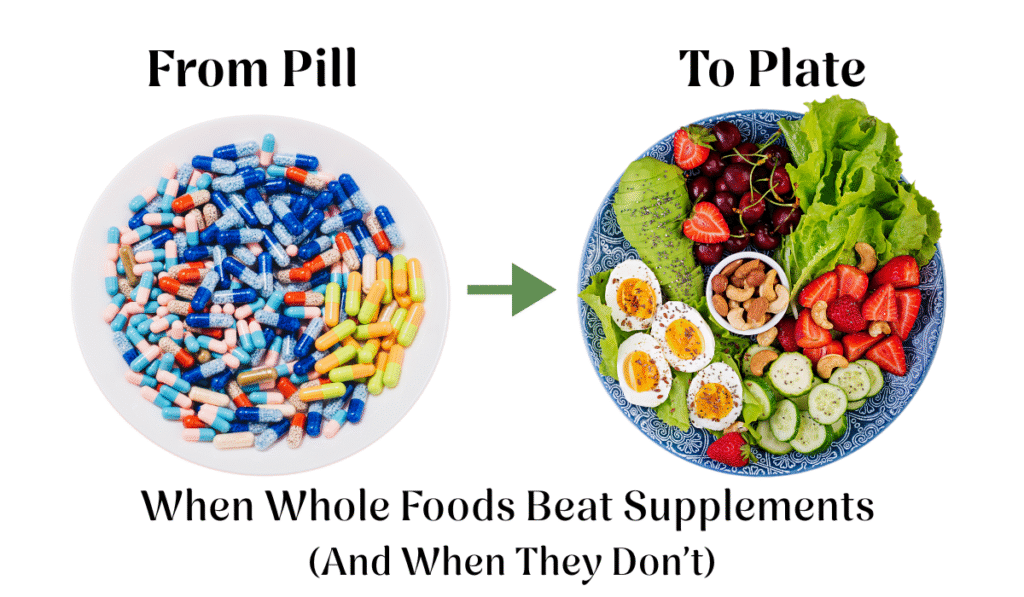
- Real food sources with proper combinations are more effective than isolated supplementation.
1. What Calcium Is and How Your Body Uses It
Calcium is a mineral that your body requires daily in relatively large amounts.
Unlike many nutrients, calcium plays two roles simultaneously.
It acts as a structural component and as a signaling molecule.
About 99% of calcium is stored in bones and teeth, where it provides strength and stability.
The remaining 1% circulates in blood and tissues, where it is tightly regulated.
This small fraction is responsible for critical functions that keep your body working.
Your body uses calcium to:
- Build and maintain bones and teeth
- Support muscle contraction
- Enable nerve signaling
- Regulate heart rhythm
- Assist in blood clotting
- Activate enzymes and hormones
Calcium works not just as a building nutrient, but as a regulator of multiple systems.
2. Primary Functions of Calcium
Calcium supports several essential systems in the body:
Bone Health
- Builds and maintains bone density
- Acts as a long-term mineral reserve
- Supports skeletal strength
Muscle Function
- Enables muscle contraction and relaxation
- Prevents cramps and spasms
- Supports smooth muscle activity
Nervous System
- Helps transmit nerve signals
- Regulates nerve excitability
- Supports brain communication
Heart Health
- Maintains normal heart rhythm
- Supports the contraction of cardiac muscle
- Works with sodium and potassium for electrical signaling
Blood and Enzymes
- Essential for blood clotting
- Acts as a cofactor for multiple enzymes
Calcium is both a structural and functional nutrient.
3. Calcium Regulation – How the Body Maintains Balance
Calcium levels in the blood are tightly controlled.
The body uses a hormonal system to maintain balance.
Parathyroid Hormone (PTH):
- Increases blood calcium when levels drop
- Pulls calcium from bones
- Increases calcium reabsorption in the kidneys
Vitamin D:
- Improves calcium absorption from the gut
- Supports bone mineralization
Calcitonin:
- Helps lower blood calcium when levels are high
Bones are not static.
They are constantly being broken down and rebuilt.
This process helps maintain calcium balance in the body.
4. Calcium and Your Energy and Muscle Function
Calcium plays an important role in daily energy and physical function.
Low calcium availability:
- Causes muscle weakness
- Leads to cramps and stiffness
- Reduces physical performance
- Affects nerve signaling
Adequate calcium levels:
- Support smooth muscle contraction
- Improve strength and endurance
- Help maintain stable nerve function
- Reduce fatigue related to neuromuscular imbalance
Calcium is essential for efficient movement and function.
5. Calcium and Bone Health – The Core Connection
Calcium is the primary mineral responsible for bone strength.
It works together with other nutrients to maintain bone structure.
It:
- Builds bone mass during growth
- Maintains bone density in adulthood
- Slows bone loss with aging
- Supports repair and remodeling
Low calcium intake over time can lead to:
- Weak bones
- Increased fracture risk
- Osteopenia and osteoporosis
Bone health depends not just on calcium intake, but also on its absorption and utilization.
6. Calcium and Mineral Balance – The Real Story
Calcium does not work alone.
It is part of a larger mineral balance system.
It helps:
- Maintain interaction with magnesium and phosphorus
- Support proper nerve and muscle function
- Prevent excessive mineral loss
- Maintain internal balance between minerals
Excess calcium without proper cofactors can lead to misplacement of calcium, where it deposits in soft tissues instead of bones.
Excess calcium without balance can lead to:
- Kidney stones
- Constipation
- Reduced absorption of iron and zinc
Calcium balance is more important than calcium quantity.
7. Daily Calcium Requirements
Most adults need:
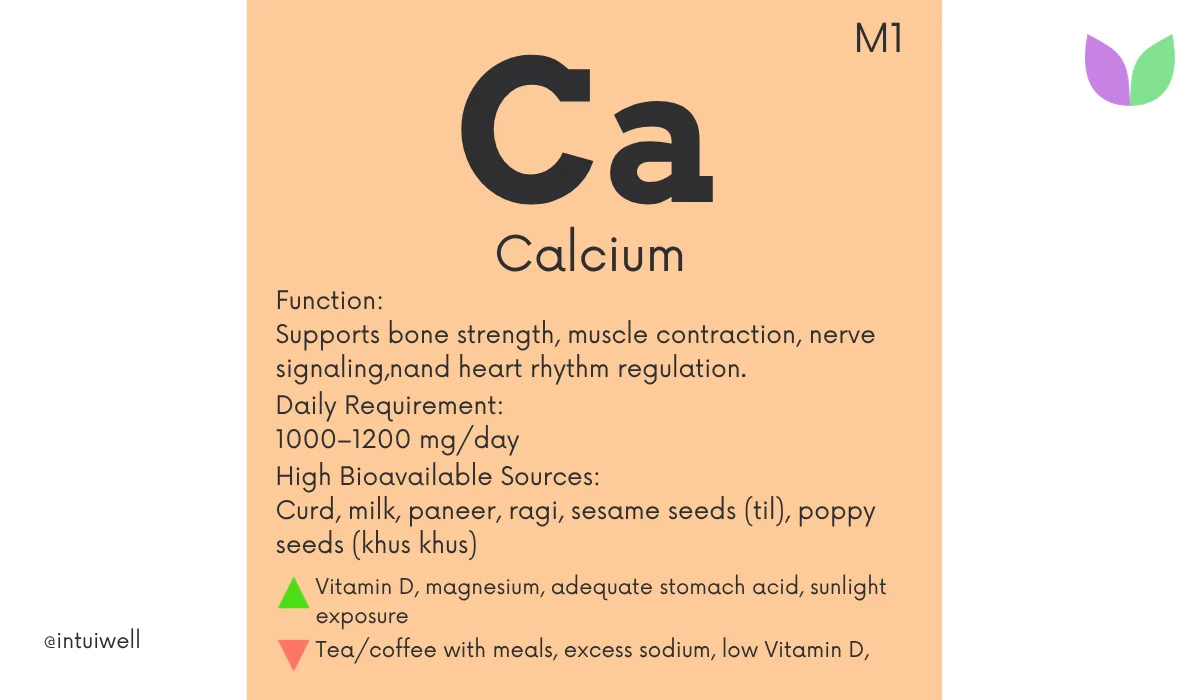
1000–1200 mg of calcium per day
Practical targets:
- Adults: around 1000 mg/day
- Women above 50: around 1200 mg/day
- Adolescents: higher needs during growth
Needs increase if:
- You have low Vitamin D
- You are pregnant or breastfeeding
- You have low bone density
- Your diet lacks dairy or calcium-rich foods
Calcium intake should be consistent across the day.
8. Where Your Calcium Really Comes From
Best natural sources:
Dairy (Highest bioavailability)
- Curd (dahi)
- Paneer
- Milk
Millets (Exceptionally rich)
- Ragi
Seeds (Dense sources)
- Sesame seeds (til)
- Poppy seeds (khus khus)
Nuts (Supportive sources)
- Almonds
Legumes (Supportive, not primary)
- Chickpeas (chana)
- Rajma
- Soy products (tofu if calcium-set)
Vegetables (Limited usable calcium)
- Amaranth leaves (chaulai)
- Drumstick leaves (moringa)
Important clarification:
Most green leafy vegetables, like spinach, are not reliable calcium sources due to oxalates, which significantly reduce absorption.
Calcium intake should rely primarily on dairy, ragi, and sesame.
Not all the calcium you eat is absorbed.
Absorption depends on:
- Vitamin D status
- Gut health
- Presence of oxalates and phytates
- Form of calcium (food vs supplement)
9. Timing and Practical Use
Calcium works best when distributed across meals.
Simple habits:
- Include one calcium-rich food in each main meal
- Combine with Vitamin D sources such as sunlight exposure
- Avoid tea or coffee immediately before meals
- Use traditional foods like ragi and sesame regularly
- Keep intake in divided amounts rather than large doses
Avoid taking very large amounts at once.
10. Signs You May Be Low on Calcium
Common signals:
- Muscle cramps or spasms
- Weakness or fatigue
- Brittle nails
- Bone pain
- Dental issues
- Tingling sensation
If ignored over time, a deficiency may affect bone strength.
11. When Calcium Can Backfire
More calcium is not always better.
Calcium can cause problems when:
- Intake is very high from supplements
- Vitamin D is low
- Magnesium intake is inadequate
- Hydration is poor
- Vitamin K2 is insufficient for proper calcium utilization
Balance rule:
Calcium + Vitamin D + Magnesium = Proper utilization
Calcium without balance can lead to poor outcomes.
12. Calcium and Common Health Conditions
Osteoporosis
Calcium supports bone density and reduces fracture risk.
Hypertension
Calcium helps regulate vascular function as part of overall mineral balance.
Pregnancy
Supports fetal bone development and prevents maternal depletion.
Muscle Cramps
Adequate calcium supports normal muscle function.
Hormonal Health
Supports nerve stability and may help reduce symptoms like cramps.
13. Lab Markers Related to Calcium
Calcium has measurable markers.
Common tests include:
- Serum calcium
- Ionized calcium
Supporting markers:
- Vitamin D levels
- Parathyroid hormone (PTH)
- Bone density scans
Serum calcium is tightly regulated and often remains normal even when body stores are low.
Low calcium status is better reflected through Vitamin D levels, PTH, and bone density over time.
Assessment requires a combination of labs and symptoms.
14. Calcium in Different Life Stages
Children
Require calcium for growth and bone development.
Adults
Need consistent intake for maintenance.
Elderly
Higher risk of bone loss and fractures.
Pregnancy
Increased requirement for fetal development.
15. Common Calcium Myths
“Calcium is only for bones.”
Wrong. It supports muscles, nerves, and heart function.
“More calcium is always better.”
Not true. Excess can cause imbalance.
“Milk alone is enough.”
Diversity of sources improves intake and balance.
“Supplements are better than food.”
Whole foods provide better absorption and support.
16. Practical IntuiWell Calcium Framework
Use this as your daily guide.
Step 1: Set a Target
Aim for 1000–1200 mg/day.
Step 2: Build Every Meal
- Include a calcium-rich food in each meal
Step 3: Add Smart Extras
- Use sesame seeds or ragi regularly
- Include nuts like almonds
Step 4: Support Absorption
- Ensure adequate Vitamin D
- Avoid tea or coffee near meals
Step 5: Balance Nutrients
- Maintain magnesium intake
- Avoid excess supplementation
17. Red Flags: When to See a Doctor
Seek help if you have:
- Frequent fractures
- Persistent bone pain
- Kidney stones
- Severe muscle cramps
- Sudden weakness
18. Summary: How to Use This Article
Think of calcium as both a structural and regulatory nutrient.
It:
- Builds and maintains bones
- Supports muscle and nerve function
- Regulates heart activity
- Works with other nutrients for balance
- Requires proper absorption, not just intake
In the IntuiWell Nutrient Periodic Table™, Calcium (M1) forms the foundation of structural and functional health.
Author
Written by: Shivani Jain
Co-founder & Clinical Lead Nutritionist, IntuiWell
Certified Nutritionist (Master’s in Foods & Nutrition)
Helping people simplify nutrition through science, tradition, and practical kitchen wisdom.
Summary
Calcium is a macro mineral essential for bone strength, muscle function, nerve signaling, and heart rhythm. While most calcium is stored in bones, its active role in blood and tissues is critical for daily functioning. Calcium balance is tightly regulated by hormones and depends on Vitamin D, magnesium, and overall diet quality.
Deficiency develops gradually and may present as muscle cramps, fatigue, or bone weakness. Excess intake, especially from supplements, can lead to kidney stones and mineral imbalance. The most effective way to meet calcium needs is through a balanced diet that includes dairy, ragi, seeds like sesame, and proper lifestyle support such as sunlight exposure.
Calcium is not just about intake. It is about absorption, balance, and long-term maintenance of structural and metabolic health.
FAQs
1. What are the main benefits of calcium?
Calcium supports bone strength, muscle contraction, nerve signaling, heart rhythm, and blood clotting. It’s not just for bones—it’s critical for daily body function.
2. What are the best sources of calcium?
The most effective sources are:
- Dairy (milk, curd, paneer)
- Ragi (millets)
- Sesame seeds
- Almonds (supportive)
Food sources outperform supplements in absorption and long-term results.
3. How much calcium do I need daily?
Most adults need 1000–1200 mg per day, depending on age, gender, and life stage.
4. What are the signs of calcium deficiency?
- Muscle cramps
- Weakness
- Fatigue
- Bone pain
- Brittle nails
These develop slowly, which is why most people ignore them until it’s too late.
5. Is taking calcium supplements safe?
Not automatically. Excess calcium—especially from supplements—can cause:
- Kidney stones
- Poor mineral balance
- Reduced absorption of other nutrients
A food-first approach is the smarter move.
6. Why is calcium absorption important?
Because intake alone means nothing. Without Vitamin D, magnesium, and good gut health, calcium won’t be properly used by the body.
7. Can too much calcium be harmful?
Yes. More is not better. Imbalance leads to calcium depositing in the wrong places (like kidneys instead of bones).
Stop guessing your nutrition. Start fixing it.
If you want:
- A personalized calcium + nutrient plan
- Clarity on deficiencies and absorption issues
- Practical, food-based solutions (not random supplements)
👉 Book a consultation call today
👉 Or request a call back, and we’ll reach out to you
Key References:
- Indian Council of Medical Research (ICMR-NIN). Nutrient Requirements for Indians (2020)
https://www.nin.res.in/RDA_Full_Report_2020.html - National Institute of Nutrition (India). Dietary Guidelines for Indians
https://www.nin.res.in - National Health Service (UK). Calcium and Bone Health
https://www.nhs.uk/conditions/vitamins-and-minerals/calcium/ - National Institutes of Health (NIH). Calcium Fact Sheet for Health Professionals
https://ods.od.nih.gov/factsheets/Calcium-HealthProfessional/ - World Health Organization (WHO). Calcium Intake Recommendations
https://www.who.int/publications/i/item/9789241549959