Deep Dive Into M2: Magnesium From The IntuiWell Nutrient Periodic Table™
Quick Takeaways
- Magnesium is a macro mineral involved in hundreds of reactions related to energy production, nerve signaling, muscle relaxation, and metabolic regulation.
- It plays a major role in muscle relaxation, stress balance, sleep quality, blood sugar regulation, and heart function.
- Magnesium works closely with calcium, Vitamin D, potassium, and sodium to maintain mineral balance in the body.
- Low magnesium intake is common due to refined diets, low intake of seeds and legumes, stress, digestive issues, poor sleep, and excess alcohol intake.
- Deficiency may show up as cramps, fatigue, poor sleep, headaches, constipation, irritability, or increased stress sensitivity.
- Magnesium from whole foods is generally safer and more balanced than unnecessary high-dose supplementation.
- Gut health, medications, stress levels, blood sugar balance, and food quality all affect magnesium status.
1. What Magnesium Is and How Your Body Uses It
Magnesium is a mineral required for hundreds of biochemical reactions in the body.
Unlike nutrients that perform one isolated role, magnesium acts as a broad regulator across multiple systems.
Most magnesium is stored in:
- Bones
- Muscles
- Soft tissues
Only a small amount circulates in the blood.
Your body uses magnesium to:
- Produce and activate cellular energy (ATP)
- Support muscle relaxation
- Maintain nerve signaling
- Regulate blood sugar balance
- Support heart rhythm
- Activate Vitamin D
- Support protein and DNA synthesis
Magnesium functions as both a metabolic and regulatory mineral.
2. Primary Functions of Magnesium
Magnesium supports several critical systems in the body:
Muscle Function
● Supports muscle relaxation
● Helps prevent cramps and spasms
● Balances calcium activity in muscles
Nervous System
● Helps regulate nerve signaling
● Supports relaxation and sleep quality
● Helps maintain stress resilience
Energy Production
● Required for ATP activation and energy metabolism
● Supports cellular energy production
Heart Health
● Supports stable heart rhythm
● Helps regulate vascular function
● Works with potassium and sodium in electrical signaling
Metabolic Health
● Supports insulin sensitivity
● Helps regulate glucose metabolism
Bone Health
● Supports bone structure along with calcium and Vitamin D
Magnesium acts as a regulatory mineral across multiple body systems.
3. Magnesium Regulation – How the Body Maintains Balance
Magnesium balance depends on intake, absorption, storage, and loss.
The body regulates magnesium through:
- Intestinal absorption
- Kidney reabsorption
- Bone storage
Several factors affect magnesium levels:
- Chronic stress
- High intake of ultra-processed foods
- Low intake of seeds, legumes, and whole foods
- Alcohol excess
- Poor gut health
- Digestive disorders
- Certain medications like antacids, proton pump inhibitors, and diuretics
Chronic stress may increase magnesium demand and urinary magnesium loss over time.
Magnesium also works closely with:
- Calcium
- Vitamin D
- Potassium
Imbalance in one nutrient often affects the others.
4. Magnesium and Your Energy and Nervous System
Magnesium is deeply connected to physical and mental energy.
Low magnesium availability:
- Increases fatigue
- Reduces stress tolerance
- Causes muscle tightness
- Affects sleep quality
- Increases irritability and headaches
Adequate magnesium levels:
- Support steady energy production
- Promote relaxation
- Improve muscle recovery
- Support healthy sleep cycles
Magnesium is often referred to as the body’s natural calming mineral.
5. Magnesium and Muscle and Nerve Health – The Core Connection
Magnesium plays a major role in muscle and nerve balance.
It:
- Helps muscles relax after contraction
- Reduces excessive nerve stimulation
- Supports proper electrical signaling
- Helps maintain coordination and recovery
Low magnesium intake may contribute to:
- Muscle cramps
- Eye twitching
- Restlessness
- Poor sleep
- Tension headaches
Magnesium balance is essential for stable neuromuscular function.
6. Magnesium and Mineral Balance – The Real Story
Magnesium does not work independently. It interacts closely with several nutrients.
It helps:
- Regulate calcium movement and utilization
- Support Vitamin D activation
- Maintain potassium balance
- Support stable nerve and muscle signaling
Low magnesium may contribute to:
- Muscle tightness and cramps
- Poor Vitamin D utilization
- Fatigue and poor recovery
- Increased nervous system excitability
Magnesium deficiency is often overlooked because symptoms may appear gradual and non-specific.
7. Daily Magnesium Requirements
Most adults need magnesium every day, but the exact requirement depends on age, sex, life stage, activity level, diet quality, and health condition. As a practical global reference, adult magnesium needs often fall in the broad range of 300–420 mg/day, but this should not be treated as a fixed target for everyone.
Practical targets:
- Women: around 310–320 mg/day
- Men: around 400–420 mg/day
- Pregnancy: slightly increased needs
Needs increase if:
- You are under chronic stress
- You sweat heavily
- You consume highly refined diets
- You have poor blood sugar control
- You consume excess alcohol
Magnesium intake is often lower in modern refined diets.
Practical guidance:
- Adult women generally need a lower amount than adult men
- Pregnancy and lactation may increase needs
- Higher stress, heavy sweating, refined diets, poor blood sugar balance, alcohol intake, and digestive issues may increase magnesium demand
Use RDA values as a guide, not as a blind target. Food quality, absorption, gut health, and symptoms matter too.
8. Where Your Magnesium Really Comes From
Best natural sources:
Seeds (Highest magnesium density)
● Pumpkin seeds
● Sesame seeds (til)
● Chia seeds
Legumes
● Black beans
● Chickpeas (chana)
● Rajma
Soy Foods
● Soybeans
● Tofu
Moderate Sources
● Almonds
● Cashews
Other Supportive Sources
● Unsweetened or high-cocoa dark chocolate
● Spinach
Important clarification:
Seeds are among the most concentrated natural magnesium sources. Nuts like almonds and cashews contribute magnesium, but they are not as magnesium-dense as seeds.
Spinach contains magnesium, but absorption may be reduced due to oxalates.
Refined foods are generally poor magnesium sources because processing removes mineral-rich portions of the food.
Modern farming practices and food processing may also reduce the magnesium content of foods over time.
Not all magnesium consumed is absorbed.
Absorption depends on:
● Gut health
● Digestive function
● Vitamin D status
● Alcohol intake
● Overall diet quality
9. Timing and Practical Use
Magnesium works best when consumed consistently through food.
Simple habits:
- Include seeds regularly
- Use legumes frequently
- Reduce highly refined foods
- Prefer balanced whole-food meals
Many people tolerate magnesium-rich foods better than unnecessary high-dose supplements.
Magnesium intake in the evening may support relaxation and sleep quality in some individuals.
Some supplemental forms of magnesium may affect the body differently:
- Magnesium glycinate is commonly used for relaxation and sleep support
- Magnesium citrate may support bowel movements in some individuals
Supplement use should depend on individual needs and tolerance.
10. Signs You May Be Low on Magnesium
Common signals:
- Muscle cramps or twitching
- Poor sleep quality
- Fatigue or low recovery
- Headaches
- Constipation
- Increased stress sensitivity
- Restlessness or irritability
Low magnesium status may develop gradually over time.
11. When Magnesium Can Backfire
More magnesium is not always better.
Magnesium may cause problems when:
- Very high-dose supplements are used unnecessarily
- Kidney function is impaired
- Certain supplement forms trigger diarrhea
- Mineral balance is ignored
Balance rule: Magnesium + Calcium + Vitamin D = Proper balance
Excess supplementation without need may disrupt digestion and mineral regulation.
Important supplement caution:
The safety concern is usually not magnesium from food. In healthy people, excess magnesium from food is generally cleared by the kidneys.
The bigger risk comes from unnecessary high-dose magnesium supplements, magnesium-containing laxatives, antacids, or use in people with impaired kidney function.
If you have kidney disease, irregular heartbeat, are on medication, or are considering supplements for sleep, migraine, constipation, cramps, or blood pressure, speak to a doctor or qualified nutritionist first.
12. Magnesium and Common Health Conditions
Muscle Cramps: Magnesium supports muscle relaxation and recovery.
Poor Sleep: Supports relaxation and healthy sleep cycles.
Stress and Anxiety: Helps regulate nervous system activity and stress response.
Constipation: Certain forms of magnesium may support bowel movements.
Hypertension: Supports vascular relaxation and mineral balance.
Blood Sugar Imbalance: Supports insulin sensitivity and glucose metabolism.
13. Lab Markers Related to Magnesium
Magnesium has measurable markers.
Common tests include:
- Serum magnesium
Supporting markers:
- Red blood cell (RBC) magnesium
- Vitamin D levels
- Potassium levels
Serum magnesium may remain normal even when intracellular magnesium is inadequate.
Assessment often requires symptoms, dietary history, and supporting markers together.
14. Magnesium in Different Life Stages
Children: Needed for growth, muscle function, and nervous system development.
Adults: Supports stress balance, metabolism, and energy production.
Elderly: Higher risk of deficiency due to lower intake and absorption.
Pregnancy: Supports muscle function and increased metabolic demands.
15. Common Magnesium Myths
“Magnesium is only for muscle cramps.”
Wrong. It supports hundreds of biochemical functions.
“If blood magnesium is normal, levels are adequate.”
Not always. Tissue deficiency may still exist.
“Supplements work better than food.”
Whole foods provide safer and more balanced intake.
“Only athletes need magnesium.”
Stress, poor sleep, refined diets, and digestive issues can increase magnesium needs in many people.
16. Practical IntuiWell Magnesium Framework
Use this as your daily guide.
Step 1: Set a Target
Aim for 300–420 mg/day.
Step 2: Build Every Meal
Include seeds or legumes regularly
Step 3: Add Smart Extras
● Use pumpkin seeds or sesame seeds regularly
● Prefer minimally processed foods
Step 4: Support Absorption
● Improve gut health
● Reduce excess alcohol and ultra-processed foods
Step 5: Balance Nutrients
● Maintain proper calcium and Vitamin D balance
● Avoid unnecessary high-dose supplementation
17. Red Flags: When to See a Doctor
Seek help if you have:
● Persistent muscle spasms
● Irregular heartbeat
● Severe weakness
● Chronic digestive issues
● Ongoing fatigue despite adequate diet
18. How to Use This Article
Think of magnesium as the body’s balancing and calming mineral. It:
- Supports energy production
- Helps muscles and nerves function properly
- Supports stress resilience and sleep
- Works closely with calcium and Vitamin D
- Helps maintain metabolic and cardiovascular balance
In the IntuiWell Nutrient Periodic Table™, Magnesium (M2) acts as a key regulator of energy, relaxation, and mineral balance.
How This Fits Into The IntuiWell Nutrient Periodic Table
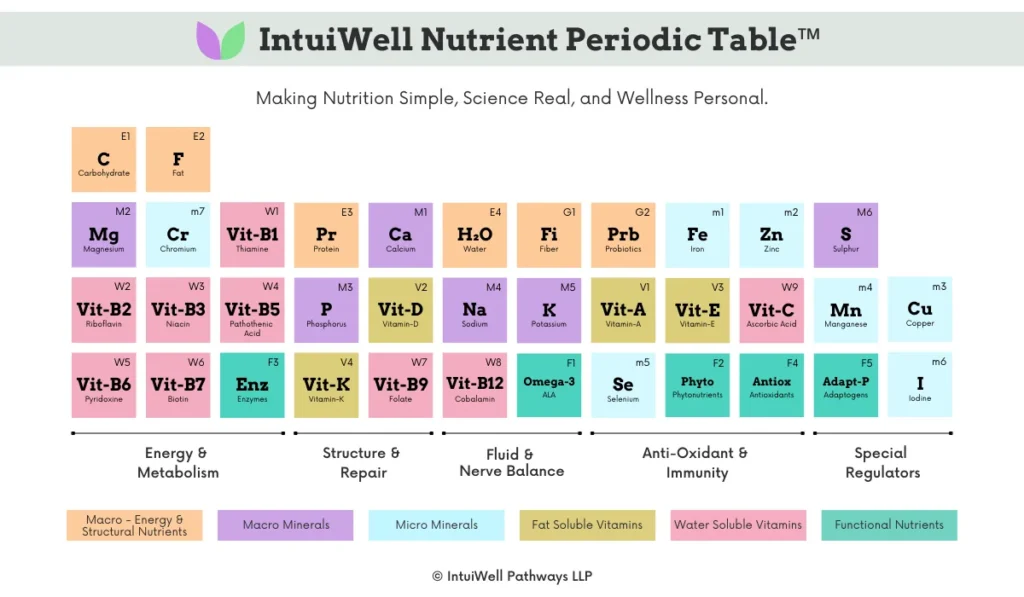
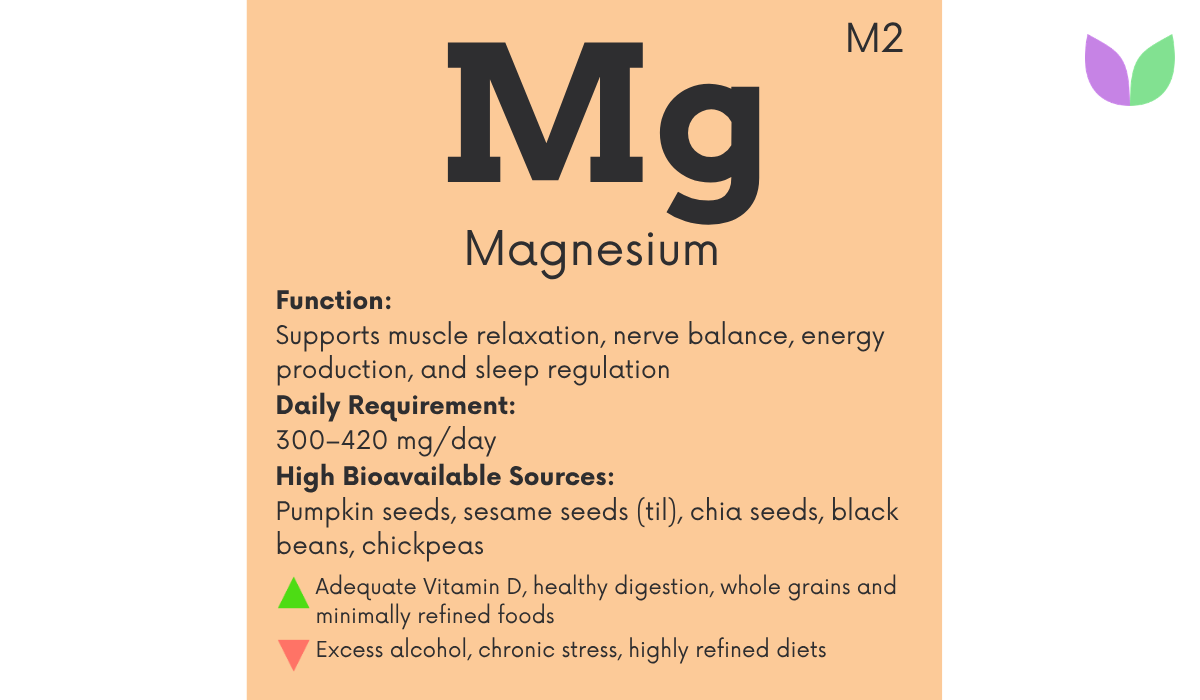
This is the M2 – Magnesium tile from the IntuiWell Nutrient Periodic Table™.
It helps you understand why magnesium is more than a muscle-cramp mineral. Magnesium supports energy production, muscle relaxation, nerve signalling, sleep quality, stress balance, blood sugar regulation, and mineral balance.
Next in sequence: M3 – Phosphorus. Learn how phosphorus supports energy production, bone structure, and cell function.
Author
Written by: Shivani Jain
Co-founder – IntuiWell & Clinical Lead Nutritionist (Master’s in Foods & Nutrition)
Helping people simplify nutrition through science, tradition, and practical kitchen wisdom.
Summary
Magnesium is a macro mineral involved in energy production, muscle relaxation, nerve signaling, sleep regulation, and metabolic balance. Modern refined diets, chronic stress, digestive issues, poor food quality, and low intake of magnesium-rich foods commonly contribute to low magnesium intake and poor magnesium status.
Deficiency may present as muscle cramps, fatigue, headaches, constipation, poor sleep, irritability, or increased stress sensitivity. Magnesium also works closely with calcium, potassium, and Vitamin D, making overall mineral balance important for proper function.
The best dietary magnesium sources include seeds, legumes, soy foods, and minimally processed whole foods rather than refined foods. Magnesium intake is not only about quantity, but also about absorption, lifestyle, gut health, and overall dietary quality.
FAQs
1. Is magnesium only useful for muscle cramps?
No. Magnesium supports muscle relaxation, nerve signalling, energy production, stress balance, sleep quality, blood sugar regulation, and heart rhythm.
2. Can I take magnesium every night for sleep?
Not without understanding your need. Some people may benefit, but sleep issues can also come from stress, caffeine, poor routine, low protein, blood sugar swings, or medical conditions.
3. Which foods are best for magnesium in Indian diets?
Pumpkin seeds, sesame seeds, chia seeds, rajma, chana, soybeans, tofu, almonds, cashews, spinach, and whole grains can support magnesium intake.
4. Is serum magnesium enough to detect deficiency?
Not always. Serum magnesium may remain normal even when body stores are low. Symptoms, diet history, medications, gut health, and supporting markers should be reviewed together.
5. Can too much magnesium be harmful?
Yes, especially from high-dose supplements, laxatives, antacids, or in people with kidney problems. Food-based magnesium is usually safer for most healthy people.
Need Help Applying This To Your Diet?
Magnesium is important, but guessing your intake or taking random supplements can create more confusion. Your body needs the right food pattern, gut support, stress management, sleep rhythm, and mineral balance to use magnesium properly.
At IntuiWell, we help you understand your magnesium intake, symptoms, food sources, lifestyle triggers, and when testing or supplementation may be needed.
Get structured guidance on your magnesium intake, mineral balance, sleep, stress, cramps, digestion, and food routine.
Book a Paid Nutrition Consultation
Have a quick question before booking? Message us on WhatsApp and we’ll guide you on the next best step.
Ask Us on WhatsApp
No random magnesium supplements.
No symptom-based guessing.
Just practical, food-first guidance built around your body.
Key References:
- Indian Council of Medical Research (ICMR-NIN). Nutrient Requirements for Indians (2020)
https://www.nin.res.in/RDA_Full_Report_2020.html - National Institute of Nutrition (India). Dietary Guidelines for Indians
https://www.nin.res.in - National Institutes of Health (NIH). Magnesium Fact Sheet for Health Professionals
https://ods.od.nih.gov/factsheets/Magnesium-HealthProfessional/ - World Health Organization (WHO). Healthy Diet Guidelines
https://www.who.int/news-room/fact-sheets/detail/healthy-diet - Harvard T.H. Chan School of Public Health – Magnesium
https://nutritionsource.hsph.harvard.edu/magnesium/