Deep Dive Into M3: Phosphorus From The IntuiWell Nutrient Periodic Table™
Phosphorus: The Energy and Structural Mineral Every Cell Depends On
Quick Takeaways
- Phosphorus is a macro mineral essential for energy production, bone structure, cellular repair, and metabolic function.
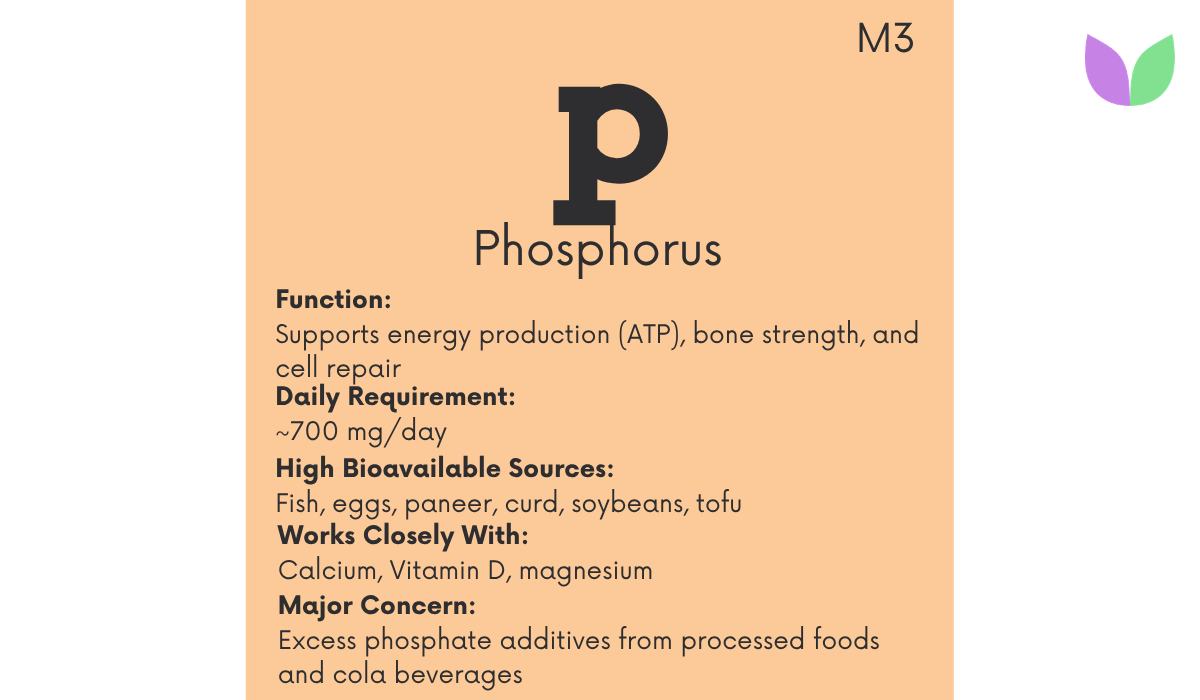
● It works closely with calcium, magnesium, and Vitamin D to maintain structural and mineral balance.
● Most phosphorus in the body is stored in bones and teeth, while the remaining phosphorus supports cellular energy and membrane function.
● Phosphorus is a key component of ATP, the body’s primary energy molecule.
● Deficiency is uncommon in balanced diets but may occur with severe malnutrition, digestive disorders, alcoholism, or prolonged antacid use.
● Excess phosphorus from processed foods and phosphate additives may negatively affect calcium balance and long-term bone health.
● Phosphorus is naturally present in many protein-rich foods, especially animal foods and dairy.
1. What Phosphorus Is and How Your Body Uses It
Phosphorus is a mineral required in relatively large amounts by the body. It is one of the body’s most important structural and metabolic minerals.
Most phosphorus is stored in bones and teeth. The remaining phosphorus is present inside cells and tissues throughout the body.
Your body uses phosphorus to:
- Produce cellular energy through ATP
● Build and maintain bones and teeth
● Support DNA and RNA formation
● Maintain cell membrane structure
● Support muscle and nerve function
● Help regulate acid-base balance
Phosphorus functions as both an energy and structural mineral.
2. Primary Functions of Phosphorus
Phosphorus supports several major systems in the body.
Energy Production
● Forms part of ATP, the body’s primary energy molecule
● Supports cellular metabolism and energy transfer
Bone Health
● Works with calcium to maintain bone strength
● Supports skeletal structure and mineralisation
Cellular Function
● Forms part of cell membranes
● Supports growth and tissue repair
Genetic Function
● Required for DNA and RNA structure
Acid-Base Balance
● Helps maintain internal pH balance
Muscle and Nerve Function
● Supports normal cellular signalling and muscle activity
Phosphorus is involved in nearly every living cell in the body.
3. Phosphorus Regulation: How the Body Maintains Balance
Phosphorus balance depends on dietary intake, intestinal absorption, kidney regulation, and hormonal balance.
The body regulates phosphorus through:
- Vitamin D
● Parathyroid Hormone, also called PTH
● Kidney function
Kidney function plays a major role in phosphorus regulation because excess phosphorus is mainly removed through the kidneys.
Phosphorus works closely with calcium, magnesium, and Vitamin D. Several factors may affect phosphorus balance, including kidney disease, excess intake of processed foods, phosphate additives, poor dietary quality, severe digestive disorders, and chronic alcohol excess.
4. Phosphorus and Your Energy Levels
Phosphorus plays a major role in how the body produces and uses energy.
Low phosphorus availability may reduce energy production, contribute to weakness and fatigue, and affect muscle performance.
Adequate phosphorus levels support ATP production, cellular energy transfer, physical function, and recovery.
Phosphorus is central to the body’s energy systems.
5. Phosphorus and Bone Health: The Core Connection
Phosphorus is the second most abundant mineral in the body after calcium. It works together with calcium to form the structural framework of bones and teeth.
It helps support bone mineralisation, skeletal strength, and tooth structure.
Bone health depends on proper calcium-to-phosphorus balance rather than isolated intake of one mineral alone. Excess phosphorus intake from phosphate additives may negatively affect bone health over time, especially when calcium intake is inadequate.
6. Phosphorus and Mineral Balance: The Real Story
Phosphorus does not work independently. It interacts closely with several nutrients.
It helps support ATP and cellular energy systems, maintain skeletal structure, support cellular repair, form cell membranes, and regulate cellular activity.
Excess phosphorus relative to calcium may disturb mineral regulation and increase stress on bone metabolism over time.
Highly processed foods often contain phosphate additives. These additives are absorbed rapidly and may significantly increase phosphorus intake. Phosphorus from natural foods behaves differently from phosphorus additives found in ultra-processed foods.
Mineral balance is more important than phosphorus intake alone.
7. Daily Phosphorus Requirements
Most adults need phosphorus every day, but the exact requirement depends on age, sex, life stage, growth needs, diet quality, kidney function, and health condition.
For Indian adults, use the latest ICMR-NIN RDA values as the primary reference.
As a practical global reference, adult phosphorus needs are often around 700 mg per day, but this should not be treated as a fixed target for everyone.
Needs may increase during growth periods, pregnancy, lactation, recovery, and tissue repair.
Most balanced diets naturally provide adequate phosphorus. Deficiency is uncommon but may occur with severe malnutrition, alcoholism, digestive disorders, or long-term antacid overuse.
Use RDA values as a guide, not as a blind target. Food quality, kidney function, mineral balance, and overall health matter too.
8. Where Your Phosphorus Really Comes From
Phosphorus is naturally present in many protein-rich foods.
Animal Foods
● Fish
● Chicken
● Eggs
Dairy
● Milk
● Curd
● Paneer
Soy Foods
● Soybeans
● Tofu
Legumes
● Lentils and dals
● Chickpeas, also called chana
● Rajma
Seeds
● Pumpkin seeds
● Sunflower seeds
Phosphorus from animal foods is generally absorbed more efficiently than phosphorus from plant foods because plant phosphorus is often bound to phytates.
Most balanced diets naturally provide adequate phosphorus. The bigger concern is not usually deficiency. The bigger concern is excess phosphorus from processed foods, phosphate additives, and cola beverages.
9. Timing and Practical Use
Phosphorus is widely available in balanced diets and usually does not require special timing strategies.
Simple habits help maintain better phosphorus balance:
- Include balanced protein sources regularly
● Prefer minimally processed foods
● Limit excessive processed packaged foods and soft drinks
● Maintain proper calcium and Vitamin D balance
● Pay attention to kidney health if you have existing medical concerns
Phosphorus works best as part of an overall balanced dietary pattern.
10. Signs You May Be Low on Phosphorus
Severe phosphorus deficiency is uncommon.
Possible signs may include:
- Fatigue or weakness
● Poor appetite
● Bone discomfort
● Muscle weakness
● Poor recovery
These symptoms are usually seen in cases of severe deficiency, malnutrition, digestive disorders, or underlying medical conditions.
Do not self-diagnose phosphorus deficiency based on fatigue alone. Many common symptoms can have multiple causes.
11. When Phosphorus Can Backfire
More phosphorus is not always better.
Excess phosphorus may become a problem when intake from phosphate additives and processed foods is very high, kidney function is impaired, or calcium intake is inadequate.
A better balance rule is:
Phosphorus + Calcium + Vitamin D + Kidney Function = Proper mineral balance
Excess phosphorus without proper balance may negatively affect bone and mineral health over time. This is especially important for people with kidney disease or those who consume a high amount of packaged foods, cola beverages, processed meats, and ultra-processed snacks.
12. Phosphorus and Common Health Conditions
Bone Health
Phosphorus works closely with calcium for skeletal structure and mineralisation.
Kidney Disease
Excess phosphorus may accumulate when kidney function is impaired. People with kidney disease should follow medical and dietitian guidance.
Fatigue and Recovery
Phosphorus supports ATP and cellular energy production.
Growth and Repair
Phosphorus is important for tissue growth, DNA, RNA, and cellular repair.
13. Lab Markers Related to Phosphorus
Phosphorus has measurable markers.
Common tests include:
- Serum phosphorus, also called serum phosphate
Supporting markers include:
- Calcium
● Vitamin D
● Parathyroid Hormone, also called PTH
● Kidney function markers
Assessment should consider overall mineral balance and kidney health. One lab marker alone may not explain the full picture.
14. Phosphorus in Different Life Stages
Children and Adolescents
Phosphorus supports growth, bone development, cellular repair, and energy metabolism.
Adults
It supports energy production, structural maintenance, muscle function, and cellular health.
Elderly
Mineral regulation and kidney function become increasingly important with age.
Pregnancy
Phosphorus supports fetal growth and tissue development, but intake should remain balanced with calcium, magnesium, Vitamin D, and overall nutrition.
15. Common Phosphorus Myths
“Phosphorus deficiency is very common.”
Not usually. Most balanced diets naturally provide adequate phosphorus.
“More phosphorus improves energy.”
Not necessarily. Overall mineral balance and metabolic health matter more.
“Soft drinks are harmless sources of phosphorus.”
Many processed foods and cola beverages contain phosphate additives. Excess intake may negatively affect mineral balance over time.
“Bone health only depends on calcium.”
Bone health depends on multiple nutrients, including calcium, phosphorus, magnesium, Vitamin D, and protein.
16. Practical IntuiWell Phosphorus Framework
Use this as your daily guide.
Step 1: Maintain Balanced Nutrition
Include balanced protein-rich foods regularly.
Step 2: Prioritise Natural Food Sources
Prefer minimally processed foods over packaged foods.
Step 3: Support Mineral Balance
Maintain proper calcium, magnesium, and Vitamin D intake.
Step 4: Reduce Excess Additives
Limit excessive processed foods, cola beverages, and phosphate additives.
Step 5: Focus on Overall Dietary Quality
Balance matters more than isolated phosphorus intake.
17. Red Flags: When to See a Doctor
Seek help if you have:
- Persistent weakness
● Kidney disease
● Bone pain
● Unexplained fatigue
● Severe nutritional deficiency
● Abnormal calcium, phosphorus, Vitamin D, PTH, or kidney markers
Phosphorus balance should be handled carefully if kidney function is affected.
18. How to Use This Article
Think of phosphorus as both an energy and structural mineral.
It supports ATP and energy production, works with calcium for bone strength, helps maintain cellular structure, supports DNA and RNA, and plays a role in metabolic function.
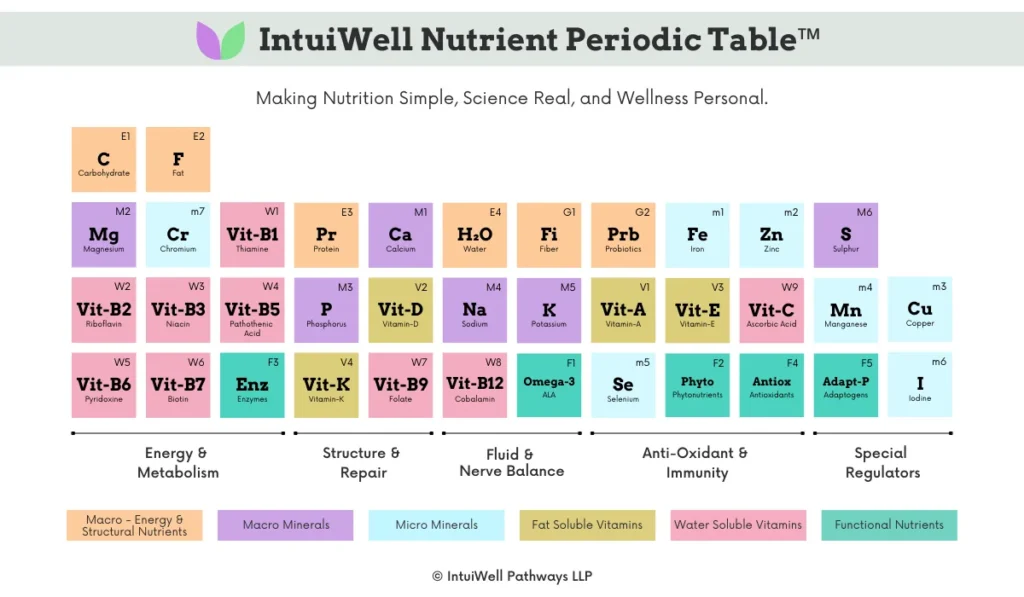
In the IntuiWell Nutrient Periodic Table™, Phosphorus (M3) acts as a key mineral for cellular energy, structural integrity, and metabolic balance.
How This Fits Into The IntuiWell Nutrient Periodic Table™
This is the M3 – Phosphorus tile from the IntuiWell Nutrient Periodic Table™.
It helps you understand why phosphorus is both an energy and structural mineral. Phosphorus supports ATP production, bone and tooth structure, cell membranes, DNA, RNA, tissue repair, and acid-base balance.
Next in sequence:
M4 – Sodium
Learn how sodium supports fluid balance, nerve signals, muscle contraction, and electrolyte balance.
Author
Written by: Shivani Jain
Co-founder & Clinical Lead Nutritionist, IntuiWell
Certified Nutritionist, Master’s in Foods & Nutrition
Helping people simplify nutrition through science, tradition, and practical kitchen wisdom.
Summary
Phosphorus is a macro mineral essential for ATP production, bone structure, cellular repair, and metabolic function. Most phosphorus in the body is stored in bones and teeth, while the remaining amount supports energy transfer, DNA structure, and cell membrane function.
Balanced diets usually provide adequate phosphorus through protein-rich foods such as dairy, eggs, fish, chicken, legumes, soy foods, and seeds. However, excess phosphorus intake from phosphate additives in processed foods and soft drinks may negatively affect calcium balance and long-term bone health.
Phosphorus works closely with calcium, magnesium, Vitamin D, and kidney regulation. This makes overall mineral balance more important than phosphorus intake alone.
FAQs
1. Is phosphorus deficiency common?
No. Phosphorus deficiency is uncommon in balanced diets because phosphorus is naturally present in many protein-rich foods.
2. Why does phosphorus matter for energy?
Phosphorus forms part of ATP, the body’s primary energy molecule. ATP helps cells store and transfer energy.
3. Which foods are good sources of phosphorus?
Dairy, eggs, fish, chicken, soy foods, legumes, lentils, dals, rajma, chickpeas, pumpkin seeds, and sunflower seeds can support phosphorus intake.
4. Can too much phosphorus be harmful?
Yes. Excess phosphorus from phosphate additives in processed foods and soft drinks may disturb mineral balance, especially when calcium intake is low or kidney function is impaired.
5. Should people with kidney disease watch phosphorus intake?
Yes. Kidney function plays a major role in phosphorus regulation. People with kidney disease should follow medical and dietitian guidance before changing phosphorus intake.
Need Help Applying This To Your Diet?
Phosphorus is important, but more is not always better. Your body needs the right mineral balance, kidney support, calcium intake, Vitamin D status, and food quality to use phosphorus properly.
At IntuiWell, we help you understand your phosphorus intake, food sources, mineral balance, lifestyle triggers, and when testing or dietary correction may be needed.
Option 1: Book a Paid Nutrition Consultation
Get structured guidance on your phosphorus intake, calcium balance, Vitamin D status, kidney-related markers, food choices, and daily nutrition routine.
Book a Paid Nutrition Consultation
Option 2: Ask Us on WhatsApp
Have a quick question before booking? Message us on WhatsApp and we’ll guide you on the next best step.
No random mineral supplements.
No nutrition guesswork.
Just practical, food-first guidance built around your body.
Key References
- Indian Council of Medical Research (ICMR-NIN). Nutrient Requirements for Indians (2020)
https://www.nin.res.in/RDA_Full_Report_2020.html - National Institute of Nutrition (India). Dietary Guidelines for Indians
https://www.nin.res.in - National Institutes of Health (NIH). Phosphorus Fact Sheet for Health Professionals
https://ods.od.nih.gov/factsheets/Phosphorus-HealthProfessional/ - World Health Organization (WHO). Healthy Diet Guidelines
https://www.who.int/news-room/fact-sheets/detail/healthy-diet - Harvard T.H. Chan School of Public Health – Phosphorus
https://nutritionsource.hsph.harvard.edu/phosphorus/