Potassium: The Electrolyte That Keeps Your Heart, Muscles, and Nerves Working Together
Deep Dive Into M5: Potassium From The IntuiWell Nutrient Periodic Table™
“Potassium isn’t just another mineral. It is the body’s primary intracellular electrolyte, quietly supporting every heartbeat, every muscle contraction, and every nerve signal while working in harmony with sodium to maintain life’s delicate balance.”
Quick Takeaways
Potassium is an essential electrolyte that plays a central role in maintaining fluid balance, nerve signalling, muscle contraction, heart rhythm, and normal cellular function. Although it is often associated with blood pressure, its role extends far beyond cardiovascular health.
- Potassium is the body’s primary intracellular electrolyte, with nearly 98% found inside cells, where it helps maintain normal cellular function.
- It works closely with sodium to regulate fluid balance, electrical activity, and muscle function throughout the body.
- Potassium is essential for normal nerve impulse transmission, muscle contraction, and maintaining a healthy heart rhythm.
- A diet rich in fruits, vegetables, legumes, dairy, and other minimally processed foods is the best way to meet daily potassium needs.
- Most people consume more sodium and less potassium than recommended, largely due to increased reliance on ultra-processed and packaged foods.
- Healthy kidneys tightly regulate potassium levels. Both low potassium (hypokalemia) and high potassium (hyperkalemia) can affect nerve, muscle, and heart function.
- Potassium supplements should not be taken routinely without professional advice, especially in individuals with kidney disease or those taking certain medications.
- Rather than focusing on potassium alone, maintaining a healthy sodium-to-potassium balance through a balanced dietary pattern is one of the most important principles for long-term health.
1. What Potassium Is and How Your Body Uses It
Potassium is an essential mineral and one of the body’s primary electrolytes. Unlike sodium, which is mainly found in the fluid outside cells, potassium is the primary intracellular electrolyte, with nearly 98% of the body’s potassium stored inside cells.
This unique distribution allows potassium to regulate cellular function, electrical activity, and fluid balance throughout the body. Every heartbeat, nerve impulse, and muscle contraction depends on maintaining the right concentration of potassium inside and outside cells.
Your body uses potassium to:
- Maintain fluid balance within cells
- Support nerve impulse transmission
- Enable normal muscle contraction and relaxation
- Maintain a regular heart rhythm
- Help regulate blood pressure
- Support acid-base balance
- Assist nutrient transport across cell membranes
- Support normal cellular metabolism and enzyme activity
Because potassium is essential for electrical activity, even small changes in blood potassium levels can significantly affect nerve, muscle, and heart function. Healthy kidneys continuously regulate potassium to keep its concentration within a narrow range.
2. Primary Functions of Potassium
Potassium supports several vital physiological processes that keep every organ and tissue functioning normally.
Fluid Balance
- Maintains fluid inside cells
- Works with sodium to regulate water movement throughout the body
- Supports normal cellular hydration
Nervous System
- Generates and transmits nerve impulses
- Enables communication between the brain, spinal cord, and peripheral nerves
Muscle Function
- Required for normal contraction and relaxation of skeletal muscles
- Supports smooth muscle function, including muscles of the digestive tract
- Works together with sodium, calcium, and magnesium during muscle activity
Heart Function
- Helps maintain normal electrical conduction of the heart
- Supports a regular heartbeat
Blood Pressure Regulation
- Works alongside sodium to maintain healthy blood pressure
- Supports normal vascular function as part of an overall healthy dietary pattern
Cellular Function
- Activates numerous enzymes involved in metabolism
- Supports carbohydrate metabolism and protein synthesis
- Helps maintain normal cellular function and energy production
Potassium is far more than a blood pressure mineral. It is an essential electrolyte that supports nearly every cell in the body.
3. Potassium Regulation: How the Body Maintains Balance
The body maintains potassium levels within a very narrow range because both deficiency and excess can interfere with normal nerve, muscle, and heart function.
Unlike many nutrients, potassium balance is regulated continuously throughout the day.
Several systems work together to maintain this balance.
The body regulates potassium through:
- Healthy kidneys
- Adrenal hormone (aldosterone)
- The sodium-potassium pump
- Acid-base balance
The kidneys play the most important role by removing excess potassium through urine while conserving potassium when dietary intake is low.
Aldosterone helps regulate how much potassium is excreted and how much sodium is retained, maintaining electrolyte balance.
The sodium-potassium pump continuously transports potassium into cells and sodium out of cells, helping maintain normal electrical activity and cellular function.
Several factors may influence potassium balance, including:
- Poor dietary intake
- Persistent vomiting or diarrhoea
- Excessive sweating
- Chronic kidney disease
- Certain medications such as diuretics
- Hormonal disorders affecting adrenal function
Maintaining potassium balance depends not only on adequate intake but also on healthy kidney function, normal hormone regulation, and overall electrolyte balance.
4. Potassium and Fluid Balance: The Core Connection
Potassium is the body’s primary intracellular electrolyte, meaning it is responsible for maintaining fluid balance inside cells. In contrast, sodium primarily regulates fluid outside cells.
Together, sodium and potassium maintain the movement of water between cells and the surrounding tissues, helping preserve normal hydration and cellular function.
This balance supports:
- Cellular hydration
- Blood volume
- Normal circulation
- Nutrient transport
- Waste removal from cells
- Overall tissue function
Healthy fluid balance depends on the coordinated action of potassium, sodium, chloride, water, and healthy kidney function.
When this balance is disrupted, normal cellular function may be affected.
Rather than focusing on potassium or sodium alone, maintaining an appropriate sodium-to-potassium balance through a nutritious dietary pattern is a more meaningful goal for long-term health.
5. Potassium and Nerve, Muscle & Heart Function: The Electrical Mineral
Potassium plays a central role in the body’s electrical signalling system.
Every nerve impulse, muscle contraction, and heartbeat depends on the controlled movement of potassium across cell membranes.
This movement is maintained by the sodium-potassium pump, one of the body’s most important cellular transport mechanisms. It continuously moves potassium into cells and sodium out of cells, helping maintain normal electrical activity and cellular function.
Without adequate potassium, nerves cannot transmit signals efficiently, muscles may not contract and relax normally, and the heart’s electrical activity may become impaired.
Potassium supports:
Nerve Function
- Helps generate and transmit nerve impulses
- Enables communication throughout the nervous system
Muscle Function
- Supports normal contraction and relaxation of skeletal muscles
- Helps maintain smooth muscle function, including normal digestive tract movement
Heart Function
- Supports normal cardiac electrical conduction
- Helps maintain a regular heartbeat
- Works with calcium, magnesium, and sodium to support coordinated heart muscle function
Because potassium works closely with sodium, calcium, and magnesium, an imbalance in one electrolyte can influence the function of the others.
Maintaining overall electrolyte balance is more important than focusing on potassium alone.
6. Daily Potassium Requirements
Potassium is required every day, but individual requirements vary depending on age, sex, physical activity, climate, overall diet, medications, and underlying medical conditions.
For Indian adults, use the latest ICMR-NIN recommendations as the primary reference.
As a practical international reference, the World Health Organization (WHO) recommends an intake of at least 3,510 mg of potassium per day for adults to support overall health as part of a balanced diet.
Most healthy individuals can meet their potassium requirements by regularly consuming a variety of potassium-rich whole foods.
Potassium requirements may be influenced by:
- Heavy sweating
- Prolonged vomiting or diarrhoea
- Certain medications, including some diuretics
- Kidney disorders
- Endurance exercise
- Overall dietary quality
Unlike sodium, potassium supplementation is not routinely recommended unless advised by a healthcare professional.
People with chronic kidney disease or those taking medications that affect potassium levels should seek medical advice before increasing potassium intake or using potassium supplements.
The goal should be to meet potassium needs primarily through a balanced, minimally processed diet rich in naturally potassium-containing foods.
7. Where Your Potassium Really Comes From
Potassium is naturally present in a wide variety of whole foods. Unlike sodium, which is often added during food processing, potassium is most abundant in fresh, minimally processed foods.
A diet rich in fruits, vegetables, legumes, dairy, and pulses is usually the best way to meet daily potassium requirements.
Rich Food Sources of Potassium
Fruits
● Banana
● Coconut water
● Avocado
● Dried apricots
● Raisins
Vegetables
● Spinach
● Amaranth leaves (Chaulai)
● Sweet potato
● Potato (with skin)
● Beet greens
Legumes & Pulses
● White beans
● Rajma (Kidney beans)
● Soybeans
● Lentils (Masoor, Moong)
Dairy
● Milk
● Curd (Yogurt)
Other Good Sources
● Pumpkin seeds
● Pistachios
Potassium is naturally abundant in whole foods. Regularly including a variety of these foods as part of a balanced diet is generally more beneficial than relying on supplements.
8. Timing and Practical Use
Most people do not need to think about the timing of potassium intake. What matters more is consuming potassium-rich foods consistently as part of an overall healthy dietary pattern.
Simple habits can help maintain healthy potassium intake:
● Include vegetables in both lunch and dinner.
● Eat whole fruits regularly instead of fruit juices.
● Include legumes or pulses several times a week.
● Choose minimally processed foods more often than ultra-processed foods.
● Replace sugary beverages with potassium-rich options such as plain coconut water when appropriate, especially after prolonged sweating or physical activity.
● Stay adequately hydrated, particularly during hot weather and physical activity.
For healthy individuals, potassium works best when obtained naturally through a varied diet rather than through supplements. Routine potassium supplementation is generally unnecessary unless recommended by a healthcare professional.
9. Signs You May Be Low on Potassium
Low potassium (hypokalemia) may occur when potassium losses exceed intake or when certain medical conditions or medications affect potassium balance. Possible signs and symptoms include:
● Muscle weakness
● Muscle cramps
● Fatigue
● Constipation
● Tingling or numbness
● Palpitations
● Irregular heartbeat in more severe cases
● Generalized weakness
However, these symptoms are not specific to potassium deficiency and may also occur due to dehydration, magnesium deficiency, certain medications, endocrine disorders, or other medical conditions.
Persistent symptoms should be evaluated by a healthcare professional rather than self-treated with potassium supplements. Severe potassium deficiency can become a medical emergency because of its effects on heart rhythm and muscle function.
10. When Potassium Can Backfire
More potassium is not always better.
While adequate potassium intake is important for overall health, excessive potassium can also become harmful, particularly when the body cannot eliminate it effectively.
High potassium levels (hyperkalemia) are most commonly associated with:
● Chronic kidney disease
● Certain medications (such as ACE inhibitors, ARBs, potassium-sparing diuretics)
● Adrenal disorders
● Excessive potassium supplementation
● Severe dehydration or metabolic disturbances
Hyperkalemia may interfere with normal electrical activity of the heart and, in severe cases, can become life-threatening.
For healthy individuals with normal kidney function, obtaining potassium from food is generally safe because the kidneys efficiently remove excess potassium.
The concern is usually unnecessary potassium supplements, not potassium-rich whole foods.
A better way to think about potassium is:
Potassium + Sodium + Healthy Kidneys + Overall Dietary Quality = Healthy Electrolyte Balance
Rather than consuming potassium supplements without guidance, focus on achieving adequate intake through a balanced diet unless otherwise advised by your healthcare professional.
11. Potassium and Common Health Conditions
High Blood Pressure
Potassium helps balance the effects of sodium and supports normal blood pressure regulation as part of an overall healthy dietary pattern. However, increasing potassium alone is not a treatment for hypertension.
Heart Health
Potassium plays an essential role in maintaining normal heart rhythm and electrical conduction. Both low and high potassium levels may affect cardiac function.
Kidney Disease
People with chronic kidney disease often have reduced ability to remove excess potassium. Potassium intake should always be individualized under medical supervision.
Diarrhoea and Vomiting
Persistent gastrointestinal losses may reduce potassium levels and increase the risk of deficiency, particularly if symptoms are prolonged.
Heavy Sweating and Endurance Exercise
Long-duration physical activity combined with significant sweating may contribute to electrolyte losses. Individual replacement needs vary depending on the intensity and duration of activity.
Diuretic Use
Certain diuretics increase potassium loss, while others may increase potassium retention. Potassium intake should always be considered alongside medication use and medical advice.
Potassium recommendations should always be individualized based on overall health status, medications, kidney function, and laboratory findings.
12. Lab Markers Related to Potassium
Potassium status can be evaluated through laboratory investigations when clinically indicated.
The most commonly used test is:
Serum Potassium
Supporting investigations may include:
● Kidney Function Tests (Serum Creatinine, Blood Urea Nitrogen, eGFR)
● Serum Sodium
● Serum Magnesium
● Serum Chloride
● Acid-base status (when clinically indicated)
Because nearly 98% of the body’s potassium is stored inside cells, serum potassium may remain within the normal range even when total body potassium stores have changed.
Laboratory values should always be interpreted together with symptoms, medications, kidney function, hydration status, and the individual’s overall clinical picture.
A single laboratory value should never be interpreted in isolation.
13. Potassium in Different Life Stages
Potassium requirements and physiological importance remain consistent throughout life, although individual needs vary depending on age, growth, activity level, health status, and certain medical conditions.
Children and Adolescents
Potassium supports healthy growth, nerve development, muscle function, and fluid balance. Encouraging children to consume fruits, vegetables, legumes, and dairy products from an early age helps establish lifelong healthy eating habits.
Adults
Adequate potassium intake supports fluid balance, nerve signalling, muscle contraction, heart rhythm, and overall cellular function. A varied diet rich in whole foods is usually sufficient to meet daily requirements.
Older Adults
Older adults may be at greater risk of potassium imbalance due to age-related changes in kidney function, reduced food intake, medication use, or chronic health conditions. Potassium intake should always be considered alongside kidney function and medical history.
Pregnancy and Lactation
Potassium plays an important role in supporting maternal fluid balance, nerve function, and muscle activity. Most healthy women can meet their potassium needs through a balanced diet unless advised otherwise by their healthcare professional.
14. Common Potassium Myths
“Bananas are the only good source of potassium.”
No. While bananas contribute potassium, many foods such as white beans, soybeans, spinach, potatoes, sweet potatoes, coconut water, dairy products, and dried apricots are also excellent sources.
“More potassium is always better.”
No. Both low and high potassium levels can affect normal muscle, nerve, and heart function. Excessive potassium supplementation may be harmful, particularly in people with impaired kidney function.
“Potassium supplements are better than food.”
Not usually. Whole foods provide potassium along with fibre, vitamins, minerals, and other beneficial compounds. Food should remain the primary source of potassium for most healthy individuals.
“Potassium alone can control high blood pressure.”
No. Healthy blood pressure depends on multiple factors, including sodium intake, body weight, physical activity, sleep, stress, kidney function, medications, and overall dietary quality. Potassium is one important part of this broader picture.
15. Practical IntuiWell Potassium Framework
Use this simple framework to support healthy potassium intake through everyday food choices.
Step 1: Fill Half Your Plate with Vegetables
Aim to include a variety of vegetables at both lunch and dinner to naturally increase potassium intake.
Step 2: Choose Whole Fruits Daily
Eat whole fruits instead of fruit juices whenever possible. Variety is more important than relying on a single fruit such as bananas.
Step 3: Include Legumes Regularly
Add lentils, beans, chickpeas, rajma, or soybeans to your meals several times each week.
Step 4: Balance Sodium and Potassium
Reduce reliance on ultra-processed foods while increasing naturally potassium-rich whole foods to support overall electrolyte balance.
Step 5: Food First, Supplements Only When Needed
For most healthy people, potassium needs can be met through a balanced diet. Use supplements only when recommended by a qualified healthcare professional.
16. Red Flags: When to See a Doctor
Seek medical attention if you experience:
● Persistent muscle weakness
● Recurrent muscle cramps that do not improve
● Palpitations or irregular heartbeat
● Persistent vomiting or diarrhoea
● Unexplained paralysis or severe weakness
● Known kidney disease
● Abnormal potassium laboratory results
● Use of medications that affect potassium levels along with new symptoms
Do not self-treat suspected potassium deficiency or excess with supplements. Proper evaluation is important because potassium imbalance can sometimes indicate an underlying medical condition requiring prompt medical attention.
17. How to Use This Article
Think of potassium as much more than a “blood pressure mineral.”
It is the body’s primary intracellular electrolyte, essential for maintaining fluid balance, nerve signalling, muscle contraction, heart rhythm, and normal cellular function.
The goal is not simply to consume more potassium.
The goal is to achieve a healthy balance between potassium, sodium, hydration, kidney function, and overall dietary quality through a varied, minimally processed diet.
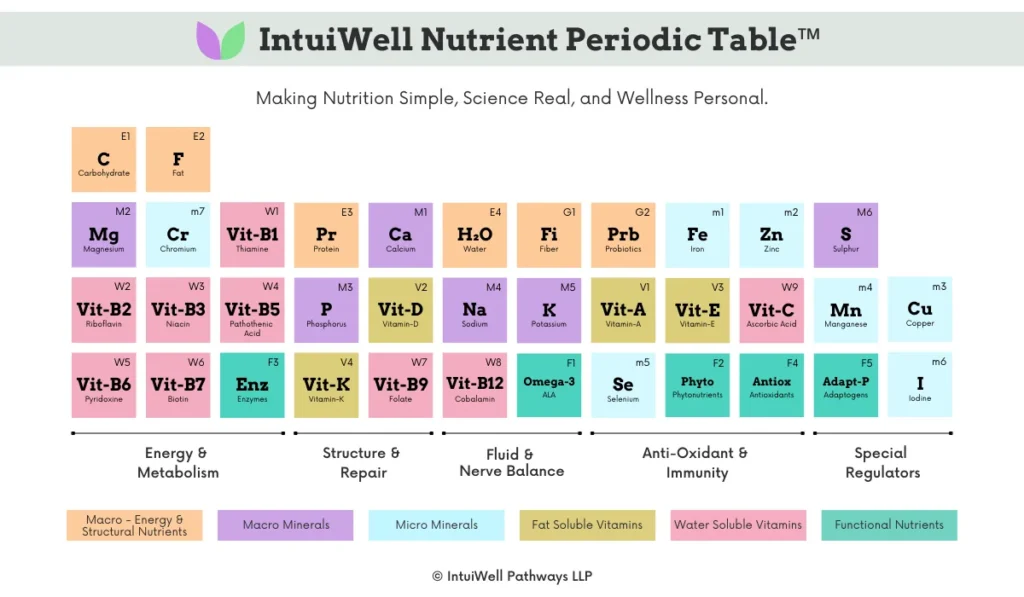
In the IntuiWell Nutrient Periodic Table™, Potassium (M5) represents the body’s primary intracellular electrolyte, highlighting its central role in maintaining electrical activity, fluid balance, and healthy physiological function.
How This Fits Into The IntuiWell Nutrient Periodic Table™
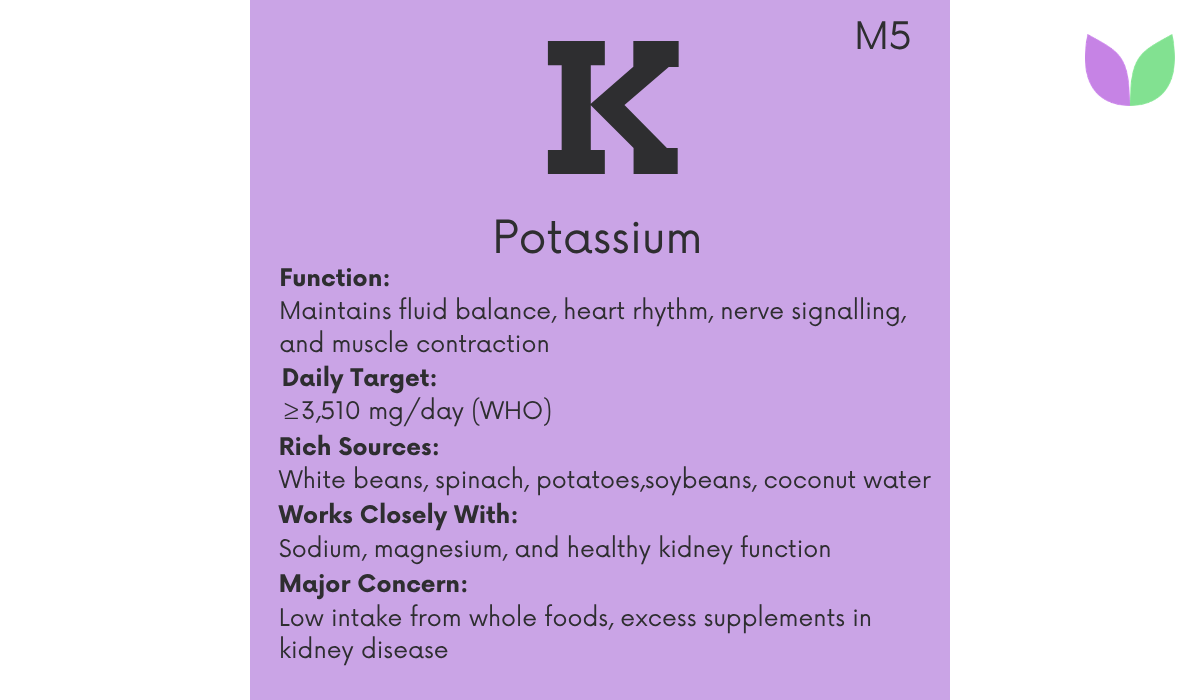
This is the M5 – Potassium tile from the IntuiWell Nutrient Periodic Table™.
Potassium is the body’s primary intracellular electrolyte, essential for maintaining fluid balance inside cells, transmitting nerve impulses, supporting muscle contraction, maintaining a healthy heart rhythm, and working in harmony with sodium to regulate overall electrolyte balance.
While sodium primarily regulates fluid outside cells, potassium maintains fluid within cells. Together, these two electrolytes help maintain normal cellular function and overall physiological balance.
Next in sequence:
Discover how chloride works alongside sodium to maintain fluid balance, support stomach acid production, aid digestion, and help regulate the body’s acid-base balance.
Author
Written by: Shivani Jain
Co-founder & Clinical Lead Nutritionist, IntuiWell
Certified Nutritionist, Master’s in Foods & Nutrition
Helping people simplify nutrition through science, tradition, and practical kitchen wisdom.
Summary
Potassium is an essential mineral and the body’s primary intracellular electrolyte. It plays a vital role in maintaining fluid balance, nerve signalling, muscle contraction, heart rhythm, and normal cellular function.
Unlike sodium, which primarily regulates fluid outside cells, potassium works within cells and helps maintain the body’s electrical and fluid balance. It also works closely with sodium, magnesium, and calcium to support healthy physiological function.
Most people can meet their potassium needs by regularly consuming fruits, vegetables, legumes, dairy products, and other minimally processed foods. For healthy individuals, obtaining potassium through a balanced diet is generally preferred over supplementation.
Both low and high potassium levels can affect normal muscle, nerve, and heart function. Therefore, potassium intake should always be considered within the context of overall dietary quality, kidney function, medications, and individual health status.
Frequently Asked Questions (FAQs)
1. Is potassium the same as potassium chloride?
No. Potassium is a mineral, while potassium chloride is one of the chemical forms used in supplements, medicines, and some salt substitutes.
2. Are bananas the best source of potassium?
Bananas are a good source, but they are not the richest source. Foods such as white beans, soybeans, spinach, potatoes, sweet potatoes, coconut water, dried apricots, dairy products, and several legumes also provide significant amounts of potassium.
3. Can I take potassium supplements on my own?
Potassium supplements should not be taken routinely without professional advice. Excess potassium may be harmful, particularly in individuals with kidney disease or those taking medications that affect potassium balance.
4. Does eating more potassium cure high blood pressure?
No. Potassium supports healthy blood pressure regulation as part of an overall healthy dietary pattern, but it is not a standalone treatment for hypertension.
5. Can I get enough potassium through food alone?
For most healthy individuals, yes. A varied diet rich in fruits, vegetables, legumes, dairy products, and minimally processed foods is usually sufficient to meet daily potassium requirements.
Need Help Applying This To Your Diet?
Knowing that potassium is important is only the first step. The next step is understanding whether you’re meeting your needs through your everyday diet and whether your overall electrolyte balance supports your health.
At IntuiWell, we help you evaluate your dietary pattern, understand food sources of potassium, interpret relevant laboratory reports, and develop practical nutrition strategies that fit your health goals and lifestyle.
Option 1: Book a Paid Nutrition Consultation
Receive personalised guidance on potassium intake, electrolyte balance, blood pressure nutrition, kidney-friendly dietary planning, and long-term healthy eating habits.
Book a Paid Nutrition Consultation
Option 2: Ask Us on WhatsApp
Have a question before booking? Send us a message on WhatsApp, and we’ll help you understand the next best step.
No unnecessary supplements.
No nutrition myths.
Just practical, evidence-based nutrition designed for real life.
Key References
- Indian Council of Medical Research (ICMR-NIN). Nutrient Requirements for Indians (2020).
https://www.nin.res.in/RDA_Full_Report_2020.html
- National Institute of Nutrition (NIN). Dietary Guidelines for Indians.
https://www.nin.res.in/DietaryGuidelinesforNINwebsite.pdf
- World Health Organization (WHO). Guideline: Potassium Intake for Adults and Children.
https://www.who.int/publications/i/item/9789241504829
- National Institutes of Health (NIH) Office of Dietary Supplements. Potassium Fact Sheet for Health Professionals.
https://ods.od.nih.gov/factsheets/Potassium-HealthProfessional/
- Harvard T.H. Chan School of Public Health. The Nutrition Source – Potassium.
https://nutritionsource.hsph.harvard.edu/potassium/